Expanding the Moment

copyright bike
Sometimes I come across a passage of writing that stops time. It’s a magical moment where the writing creates a strange paradox: the words go on but time itself stops long enough for me to observe this expanded, intense and magnified moment. It feels as if I am looking into the space between seconds.

This happened to me when I read the following passage in Janette Turner Hospital’s The Claimant. It shows a simple action where Cap’s father is candling an egg. The experience had for me the vivid clarity and intensity of a mindfulness meditation.

“Cap buries her face in the pillow. She sees the gently way her father lifts eggs from warm straw, she sees his thick gnarled fingers, the delicate way he holds each egg above the candle flame, the way he studies the dark fertile spots, the way he slides the fragile sheath of unborn chick back under the hot cushion of mother hen.” (p168)

Time stopped while I watched the sharply defined details of the scene. I was there, seeing the father’s rough hands gently handling new life, and observing how he did it with such careful cherishing. What was significant about these details was that this was the way he took baby Cap from the basket when the priest delivered her to him. A lifetime was encased in this moment when one man performed one action.

I had this experience again recently when I read the long-listed Mann Booker novel, All the Birds, Singing by Evie Wyld.

“The house was still. Dog stood by the closed door, looking at the space underneath, his hackles up and his legs straight and stiff, his tail rigid, pointing down. And then one creak, on the ceiling, like someone walked there. I held my breath and listened past the blood thumping in my ears. It was quiet and I pulled the covers up under my chin. The sheets chafed loudly against themselves. Dog stayed fixed on the door. A small growl escaped him.” (p21)

In Wyld’s passage time paused while I held my breath. I concentrated intently on the dog’s reaction to the strange sound. The fear I felt came from my experience of ‘seeing’ these carefully chosen details, but also my interpretation of their significance, what it meant that the dog was behaving in this way. It was only a moment, but it felt endless.

Both these authors held back time to show me something crucial to the story. They were saying, Hey, look at this important thing! See what this character is doing, and how he is doing it, and what it means that he is doing it like this.

They’ve painted an intense intricate and vivid world of significant detail to tag the scene’s importance. They held the moment still so I could completely absorb myself in it.

Think about doing the same next time you write an intense crucial scene.

The reason Evie Wyld or Janette Turner Hospital can show the world in such fine detail is because they consciously observe the small details.

Susan Sontag said, “A writer, I think, is someone who pays attention to the world.”

I believe that teaching ourselves to observe is one of the greatest skills we can develop as writers.

Next week I’m going to explore how we can train our observation skills. Come over and visit!

Posted in Books, Writing | Tagged , , , , , , , , | 20 Comments

500 Characters

IMG_4897
The swarming crowds on Miyajima Island don’t climb the hill behind Itsukushima Temple. Thankfully.

They’re mesmerised by the temple itself which seems to float on water at high tide. From the boardwalks they have an amazing view of the famous Torii gate out in the bay.
copy miyajima temple
The more adventurous tourist climbs the mountain. If they stop halfway up at the Daisho-in Temple they would probably head up the wide stairway to the pagoda. miyajima stairway
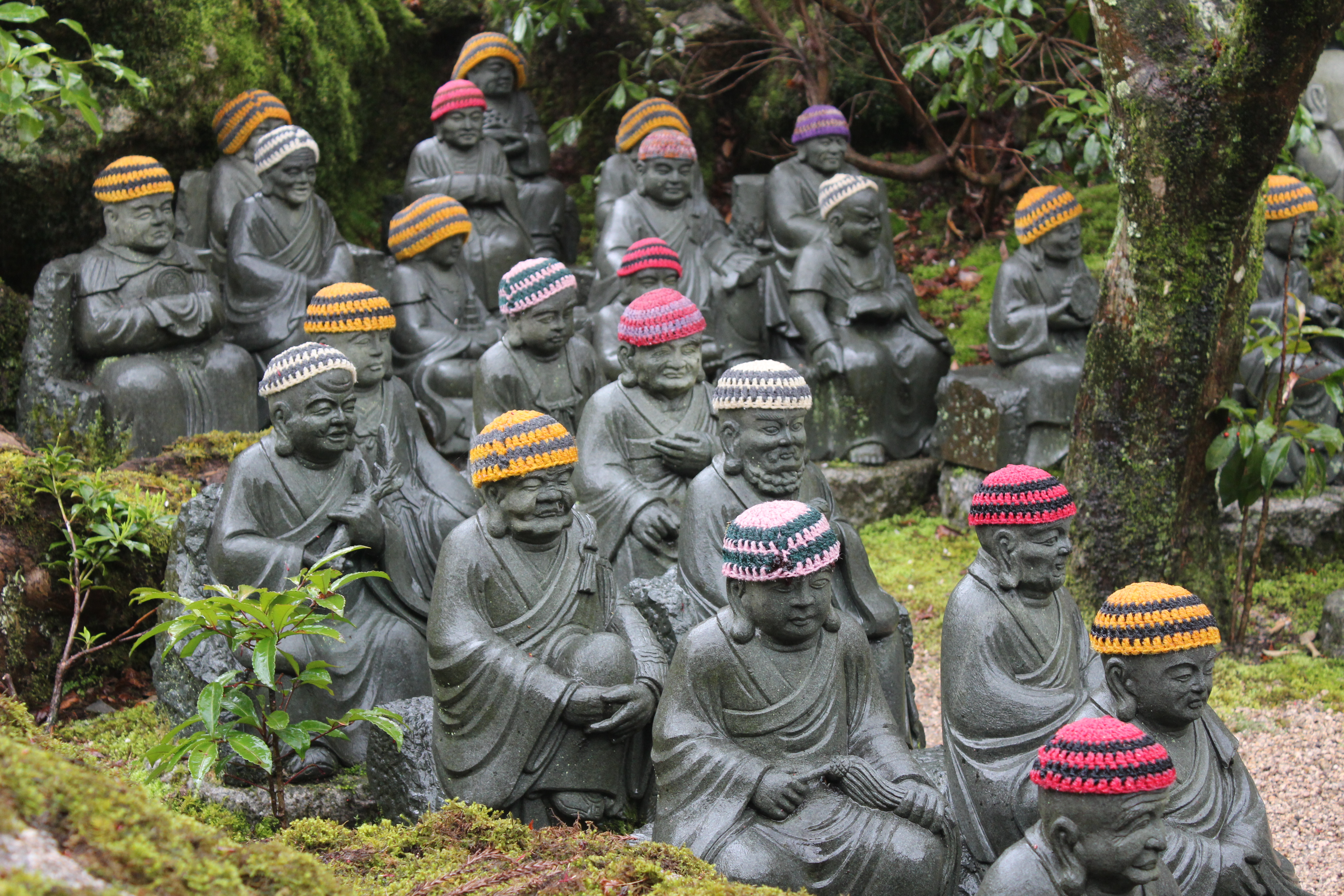
However, if they took a little hidden path on the left of the entrance gate, into a pretty garden of greenery, cherry trees and moss, and meander up steep small stone steps, they would discover the magical world of 500 buddhas.

I’m the only person in the garden at first. It’s cold and has just stopped raining. The Buddhas wear little crocheted beanies to keep them warm, I’m sure.
IMG_4730
They watch me climb the steps.
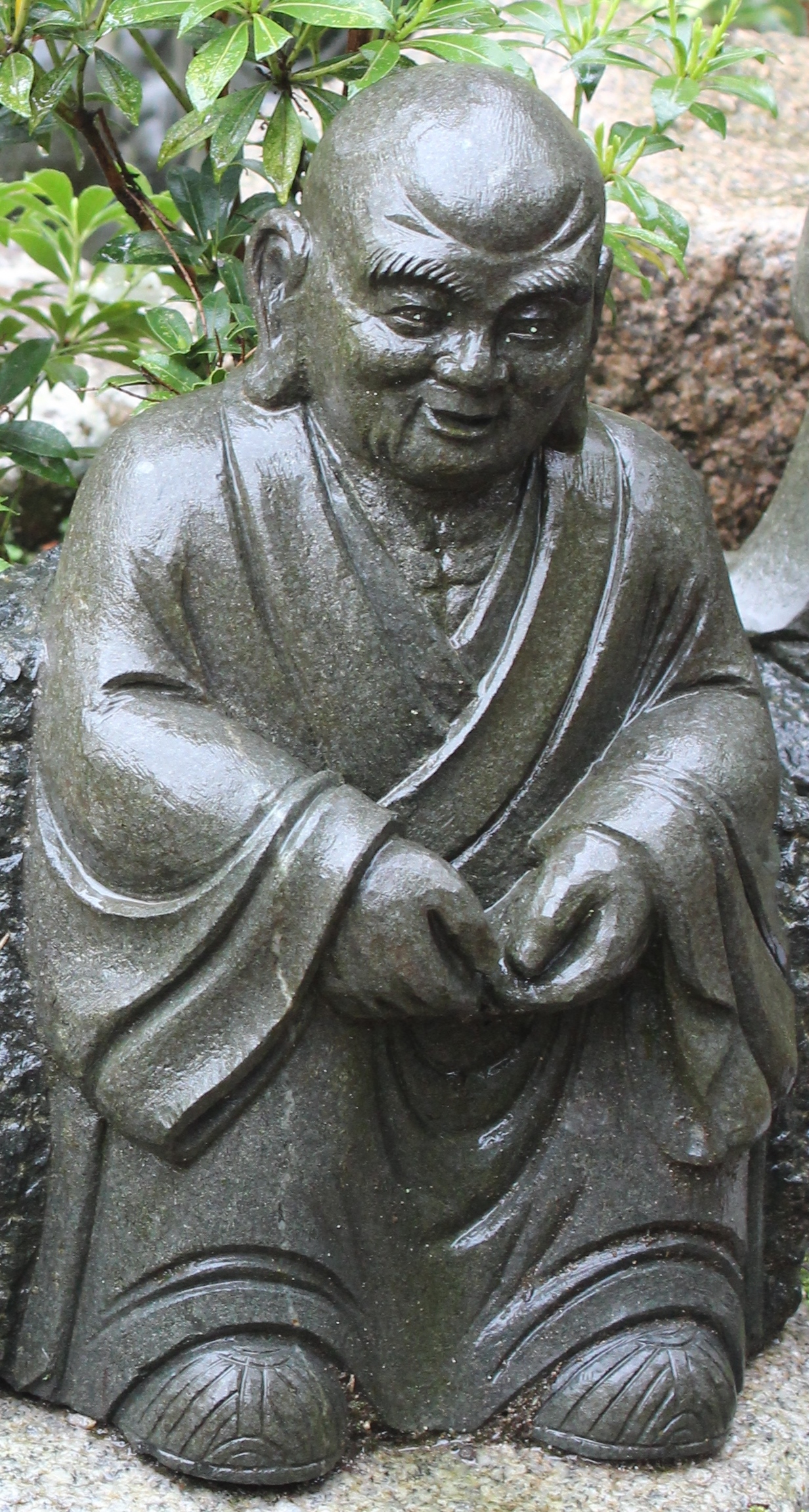
One little guy cheers when he sees me.copy happy buddhacopy shy buddha Another glances at me shyly. I do a double take on one who looks just like my father.

Every single one of those 500 Buddhas has a unique face. And an exclusive personality that shines through so strongly they seem like real people. It’s like I’m meeting all these new friends for the first time. I immediately warm to some and stop to talk. I tenderly pick a brown leaf off someone’s nose. A few I glance at warily and keep my distance.

When I stand in front of the shrine at the top of the hill I bow my head. I pray for just a little of that ability to create such distinct individual characters as skilfully in my writing.
IMG_4731

Posted in Travel, Uncategorized | Tagged , , , , , , , | 11 Comments

What is Time?

astronomical clock 1

Two things happened last weekend that made me question Time.

Firstly, I heard Jeanette Winterson discuss time at the Sydney Opera House. She grew up in a household that lived in End Time. When Mrs Winterson had drills to practice for the end of the world she would roll a sheet of paper into a cone and blow hard. On hearing the trumpet Jeanette had to scramble under the dining table for protection. Well, that’s logical. Right?

Coming from a strange beginning that was overshadowed by such an oppressive end has set Jeanette Winterson on a search for time that has no boundaries.

She found it in books, in creativity and in the mind.

“Reading is the work of the soul,” she says.jeanette winterson

That’s a huge claim to make. Reading is intimate and personal, according to Winterson. It’s how we bring the outside into our inner space, this inner place of comfort, solitude and safety.

“Books put into words the things that are difficult to feel,” she says. Other people’s works prepare her for going out into the world. They show her different ways of being. The possibilities they allow are endless.

In books and in the mind she found a place where time has no boundaries.

Secondly, a friend took me to a play at the beautifully restored Eternity Playhouse in Darlinghurst. We saw Nick Payne’s ‘Constellations’, a play about a relationship between a physicist and a beekeeper that explored the theory of multiverse.

'Constellations' by Nick Payne

‘Constellations’ by Nick Payne

Scenes were repeated three or four times with slight variations in voice tone, or words, or even outcomes. The audience was jolted from one scene to another seemingly unrelated scene and then back again. It took me 15 minutes to realise there was a “sliding doors” thing happening. We were thrown at random between the present, future and past but by the end of the play we understood. I also understood that time didn’t need to have a linear structure.

My watch ticks away the hours and minutes in ordered linear fashion. The time it measures isn’t flexible or malleable although I wish it was. It’s heartlessly indifferent to me when I’m running late or when I don’t want summer to end.

We’re always being entreated to use our time wisely, as if time were a commodity that has to be tabled or scheduled, and the value measured by how diligently and meaningfully we use it.

Even reading has fallen victim to the time Nazis. There’s pressure to read in specified times: last thing at night, on the train, during holidays. I give myself a stern talking to – a writer must read; it’s their job – but whenever I read in the middle of the day I feel I’m indulging in some guilty pleasure. Afternoon delight takes on a whole different meaning.

Time wasn’t linear when I was a child. It expanded and contracted endlessly and seemingly at will. The whole of Saturday when I ran through the bush with the neighbourhood kids was much much shorter than Monday’s hourly maths lesson.

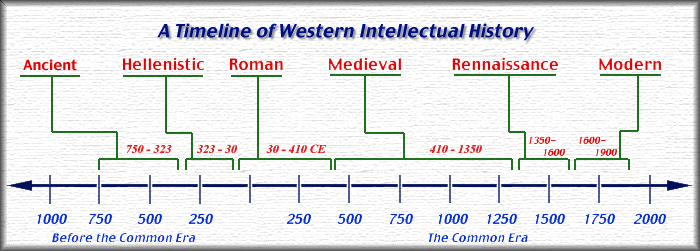
My memories exist in amalgamated time, and resist being turned into plots on a time line.
timeline
My eccentric and dearly loved Great Aunt Lil visited us often from Far North Queensland, 2300 km away. There was the time she passed a note with my mother’s name and phone number to the stationmaster through the train window four stops up the line. She told him to ring us because she was coming for a visit and needed to be picked up from our station.

In my mind that memory sits next to the visit when she discovered she had cancer, and again when she surprised me by coming all the way down for my wedding even though she was frail and ill. Memories place times together when in real time they’re not close at all. They’re grouped by emotional impact and a huge variety of other connections.

Literature understands this truth about time. It moves through time seamlessly, backwards and forwards, speeding up and slowing down. The adult Marcel Proust is dunking madeleines in lime blossom tea and is instantly transported (okay, not instantly, it is Proust) to his grandmother’s house where the whole village he knew in his childhood blossoms to life in front of him.

In Virginia Woolf’s ‘To the Lighthouse’ one day passes in 141 pages, and ten years pass in 20.

David Mitchell’s ‘Cloud Atlas’ spreads from 1850 to what could be thousands of years into the future, and then turns around and goes back again. Large patches of time are ignored or forgotten. It certainly doesn’t move relentlessly and doggedly forward minute by minute, day by day like my watch.cloud atlas

It’s no secret that reading upsets the perceived wisdom of ordered linear time. We read books in a number of sittings. Every time we pick up the book we time travel backwards or forward into it.

In between sittings we think about the book. Not just the plot or the characters, themes and ideas. Our mind sparks around these things, and ignites our own similar experiences, or tests us against what we would do in the character’s situation, or any number of feats that meld, blur or rearrange time and send us ricocheting through the ages without any regard for its perceived uniformity.

Two things happened last weekend that changed my view of Time.

Firstly, Jeanette Winterson …

Posted in Books, Reading, Writing | Tagged , , , , , , | 8 Comments

Friday Fictioneers – 8 August

Every Friday writers from around the world contribute 100 word stories prompted by a photograph. Rochelle Wisoff-Fields co-ordinates Friday Fictioneers. Thank you, Rochelle. Here’s my story and you can check out the others on Rochelle’s Friday Fictioneers blog.

Copyright - Bjorn Rudberg

Copyright – Bjorn Rudberg

Slippages Made in Dating Mary from Geophysics

1. Control film choice. Despite 27 being 33 = 3 × 3 × 3, a perfect cube, ‘27 Dresses’ disappoints.

2. Do not apprise Mary of safety risks in wearing heels where the foot forms the hypotenuse of a triangle of 40 degrees.

3. Prevaricate if asked for opinion on unattractive red dress.

4. Allow 5 minutes for return to locked house for tissues.

5. Do not reprove Mary for disrupting carefully orchestrated time schedule.

6. Allow 10 minutes for her justifications.

7. Do not permit Mary to compose time schedule for next date. 3 years. Still waiting.

Posted in Short stories, Writing | Tagged , , , , , | 57 Comments

Is There a Right Way to Write?

IMG_1003
I was astounded recently when a former student, a woman whose work I admire, who has gone on to become a successful prize-winning writer, confessed she didn’t like to read, that she didn’t read.

Until I heard this I believed that a writer who didn’t read was like a surgeon who had learned completely by practicing on patients and had never studied. I believed you’d be so handicapped it would be extremely difficult to become a good writer.

Yet here was someone I knew who was a successful writer AND she didn’t read.

Yesterday a friend lent me William Zinsser’s On Writing Well. In Chapter 1 he talks about being invited to appear on a panel at a school to discuss writing as a vocation. His fellow panellist was a successful part-time writer who was also a surgeon.

The different answers the two writers gave to the same questions were astonishing.
IMG_0994
1. What is it like to be a writer?
Dr B: Fun, easy, words just flow.
Zinsser: Hard, lonely, not fun, words seldom flow.

2. Is it important to rewrite?
Dr B: Absolutely not. The free form reflects the writer at his most natural.
Zinsser: Rewriting is the essence of writing.

3. What do you do on days it’s not going well?
Dr B: Put it aside, go fishing.
Zinsser: A professional sticks to a daily schedule, he’ll go broke if he waits to be inspired.

The way these writers thought was diametrically opposed. As I read through more answers I found I sometimes agreed with one and sometimes the other. It became apparent that neither author was ‘right’ or ‘wrong.’ They were simply relating their personal experience of writing.

My former student and I couldn’t be more different in the way we see reading.

She doesn’t view her lack of reading as a barrier to her writing. And it hasn’t been.

I’ve learn incredibly valuable things about writing from reading other writers: how Marion Halligan can immerse me completely in place, how Virginia Woolf can split open a moment in time, how Peter Carey uses metaphor seamlessly, how Jonathon Safran Foer experiments with words and form in original and truly effective ways, etc, etc.

And it made me think about other writers I know and how different we all are when it comes to how we write.

One friend writes everything in her head before one word goes on the page.
I write to find out what I want to write.

Another friend writes from a state she calls wonderland. She wanders, trusting the process and when she comes back to earth finds her work has formed itself. I often bleed words onto the page.

Another writer talks into a voice recorder. Some write straight onto the computer. I write longhand into large notebooks.
IMG_1007
Some writers don’t give a hoot about symbolism or metaphor. Others work them in painstakingly and consciously. I trust they’ll be there and search for them in my 2nd draft to bring them out.

Someone I know gets up at 5am to work when the house is sleeping because she needs complete silence to write. I saw a writer I know in a crowded and noisy café working on the novel which would later be shortlisted for the Vogel Award. I can write anywhere, just not late at night.

Some write their first draft in one burst. Others can’t write the next paragraph until the one before is perfect. I write in scenes and fiddle with one before I can move onto the next.

Some write to an outline, start at the beginning and move steadily to the conclusion. I write where the energy and excitement is and can write the ending first.

It’s easy to worry that you’re doing it all wrong when another writer finds writing easy and fun and you find it like walking over broken glass. My supervisor at university couldn’t understand why I didn’t write beautiful polished prose straight off in the first draft like he does.

‘Think of all the time and effort you’d be saving yourself if you did,’ he said exasperated.

I didn’t write like he did, because I couldn’t. I have to write my ‘pig swill’ because that’s where I discover what I want to write about, what it means to me, who my characters are, what makes them do the things they end up doing, what’s important to them. I think on the page. And because I often don’t know what I think until I write it down how can I arrange it in its clearest form, in language that expresses it most effectively.

You don’t have to be writing for long to realise there aren’t any clear-cut rules. There are all types of writing, many kinds of writers and as many kinds of methods. There are guidelines that may or may not work for you.

But we should try everything. By trying them we can adopt and adapt those methods that help us say what we want to say, that feel ‘right’ for us.

Keep in mind that what may work best for us is a way of writing that no one else practises. It may be something we came up with ourselves.

And that might include not reading.

Posted in Writing | Tagged , , , | 20 Comments

Friday Fictioneers – 18 July

Every Friday writers from around the world contribute 100 word stories prompted by a photograph supplied by Rochelle Wisoff-Fields to Friday Fictioneers. Here’s my story and you can check out the others on Rochelle’s Friday Fictioneers blog.

Copyright - Adam Ickes

Copyright – Adam Ickes

No Hard Feelings

While ever the wild goat’s head hung on the living room wall Jan believed her husband would come back. He’d hunted and killed it himself, proudly insisting on sending it to the taxidermist.

Twenty years later the goat’s eyes were still lively, the fur glossy brown. If only she’d preserved their marriage so well, but botox injections hadn’t worked.

Now her husband was marrying a vegetarian animal rights activist he met at the farmer’s market she’d sent him to.

No chance he’d come back now.

Jan had no hard feelings. She’d send the bride a present. Something her husband had loved.

Posted in Short stories | Tagged , , , , | 49 Comments

Writing in Digital Time

IMG_7977

Since I embraced the digital era in the last year – yes, I’m a slow learner – I’ve started to fear my writing has suffered for it.

Time I used to spend redrafting stories has gone into writing blog posts. Editing time is shared with Twitter and Facebook.

This morning I wandered along the esplanade not thinking about, as I’d planned, what my antagonist really wanted to achieve by stalking her ex-husband, but churning over instead what to put up next on my weekly blog post.

And I was also drawing connections between a review from the Los Angeles Review of Books I’d found through Twitter and my fragmented mind. It was written by Ann Gelder on Yury Olesha’s No Day without a Line.

In 1929 Olesha achieved critical acclaim for his novel Envy. That is until the Communist literary critics realised that instead of lauding the new soviet industrial collective it could be read as supporting “useless unproductive creative individuals.”

Yuri Olesha

Yuri Olesha

By the next decade, and not surprisingly, Olesha also “came to believe” that individualism was vulgar and worthless.

For the next 20 years Olesha wrote infrequently, badly and with little success.

Then in the post-Stalin 50s he wrote:

“Let me write fragments without finishing them – at least I’m writing! Even so, this is literature of a kind, in a sense perhaps the only kind. Perhaps it’s impossible for a psychological type like myself in a historical period like the present to write otherwise.”

Sixty years later these words could have been written by me. Not so gracefully, perhaps, and not with the real fear and consequences of speaking against the party line. But in the sense that being who I am, living in the present, the way I write is a reflection of my world.

We live in sound-bites. It’s easy to flip a thought straight onto Twitter or Facebook and think, ‘Right, I’ve said that now’, and forget about it. My comments on the blogs I follow are short grabs. I communicate through sms and mss more than by talking on a phone. News stories read like summaries, because they are.

I write my stories in fragments and piece them together only when they tell me they’re ready. Many have never morphed into longer pieces.

Flash fiction started as my challenge at about the same time I went digital, and has taken over my writing without any sign of easing. In my mind flash fiction distils a moment of life, and the best ones make that moment stand for the whole historic period we call the present. Can’t the same be said for our best interaction with digital media? flash

The writing of small pieces slots into the short spans of time available in my segmented life. The resonance here between short pieces and the fragmented life is not lost on me.

So does this make me a product of my time? Probably.

Not for a moment am I condemning these changes. I think digitalisation offers valuable chances to enrich our lives. Without twitter I would never have learned about Yury Olesha, or through him stopped to consider how my writing style is a product of the historical times I live in.

More times than I can count these short grabs have pointed me in the direction of larger, well-considered, in-depth thesis I would never have found otherwise. And the succinct self-contained ones will show me a new way of thinking that can have lasting repercussions on my life.

Maybe, as Olesha suggests, it is impossible for a psychological type like myself in a historical period like the present to write otherwise.

Unlike Olesha I have the luxury and the privilege of writing what I want and need to write.

And as importantly, my era gives me new possibilities to explore HOW I might write. A novel written in tweets, for example. A chapter written as a PowerPoint presentation like Jennifer Egan did in “A Visit from the Goon Squad.” Fiction for mobile phones that lasts as long as a commute to work.

The problem isn’t digitalisation. The problem for me is how I can use it effectively and in a way that incorporates, without losing, what was valuable from the way I used to work.
IMG_7983
That’s the job I’ve set myself.

Discipline and organisation will be the key.

Two things my psychological type does not do well, unfortunately.

Posted in Writing | Tagged , , , , , , , , | 9 Comments

Characters and Objects

bedroom objects
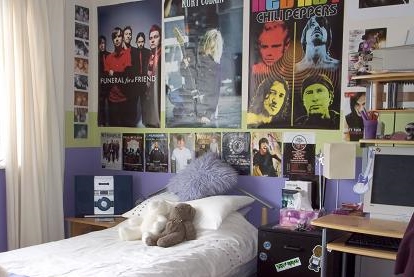
Look at someone’s room and you’ll know something of its owner. The sunroom with a bright rug of crotchet-squares hanging over a wooden rocker. The rumpus room with the giant flat-screened TV and the brick bar in the corner. The bedroom with the walls covered in posters of One Direction.

Objects show us the lives of real people and their history. Objects in fiction do the same.

Christos Tsiolkas understands the symbolic importance of objects. In this excerpt from ‘The Slap’ the objects represent the dramatic change this character has undergone in the past year.

Last summer she had stripped the room bare of all her posters, all the images of movie stars, celebrities and pop stars; she chucked out Robbie Williams and Gwen Stefani, Miss Elliot and Johnny Depp… There were only two posters on the walls now. One was of a clear blue desert sky shot through with razor wire, protesting the inhumane detention of refugees in Australia. She had snaffled it at an anti-racism rally the year before.”

These carefully chosen objects stand in for the character, her circumstances, her history, who she is and what she cares about. We can add deeper layers to our writing by giving our characters meaningful objects.

As well as history, objects can show desire. Tsiolkas’ character replaces the posters of celebrities with a poster supporting human rights. This may represent who she is now, but it could just as well represent who she desires to be.

Next time you’re developing a character, think about the objects they might have and how those objects can work to enrich their life on the page.

Posted in fiction | Tagged , , , , , , | 7 Comments

Friday Fictioneers – 27 June

Every Friday writers from around the world contribute 100 word stories prompted by a photograph supplied by Rochelle Wisoff-Fields to Friday Fictioneers. Here’s my story.

Copyright - Madison Woods

Copyright – Madison Woods

Sugar Gliders

My daughter is leaving for university in the city. She packs the important things: jeans, hair straightener, make-up, nail polish. I squeeze in towels, sheets, a first aid kit, pens.

On her last night we watch the family of sugar gliders who live in the hollow of our ironbark. At dusk they scurry around the trunk, silhouettes against the darkening sky. One by one they leap, spread their membranes and glide like small carpet squares across our backyard into the trees.

We’ve watched generations of timid babies take their first short flights.

This is our first time.

Posted in Short stories | Tagged , , , | 47 Comments

Friday Fictioneers – 20 June

Copyright - Mary Shipman

Copyright – Mary Shipman

Every Friday writers from around the world contribute 100 word stories prompted by a photograph supplied by Rochelle Wisoff-Fields to Friday Fictioneers. I love constructive comments on my stories.

Hey Diddle Diddle

This morning Tom tentatively suggested we demolish the wall between the old nursery and the kitchen. ‘A family room,’ and then he corrected it, ‘Living Room.’

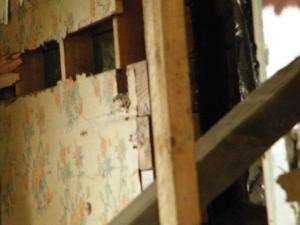
Afterwards I went into the nursery. The white cot had greyed. The Hey Diddle Diddle wallpaper was curling and jaundiced.

Twenty years ago we’d pasted it up excitedly, singing along to Whitney Houston’s I Have Nothing while the cat fiddled and the dog laughed at the weird names we gave my bump. Beezhah. Kaebidje.

Three months later the dish ran away with the spoon leaving bare patches on the wallpaper. And an empty cot.

Posted in Short stories | Tagged , , | 37 Comments