Recognising Writing Behavioural Patterns

Why, with all my good intentions, enthusiasm and motivation, do I fail to be as productive with my writing as I’d like?

Why do I start exciting new writing projects and often find they peter out after a couple of weeks? I’ve read enough NaNoWriMo blogs to know I’m not alone in this.

Someone suggested the unfinished ones were probably mediocre ideas, and while some of them were, I knew others had strong legs.

I’ve tried aiming towards a deadline and that worked. For a while.

I tried bum glue on my chair. I’m now proficient in Photoshop.

your-writing-coach-book
So with yet another year of unproductivity looming ahead, and these questions forefront in mind, I turned to Jurgen Wolff’s The Writing Coach.

What I learned surprised me.

Yes, Jurgen Wolf talked about time-management techniques. Practices for better productivity. But it wasn’t the ‘how to’ stuff that helped me – I’d seen much of it before. What changed the way I work was a simple exercise that revealed my ingrained patterns of behaviour.

Here’s the exercise.

The next time you go through a pattern, map it as you go. Take notes on the process that causes you to change your mind.

My plan for this year was that when the Christmas holidays were over I would write every morning, starting Monday 12th January.

Monday produced a hot Australian morning. One of those where the light is so brilliantly clear everything has a distinct outline and is illuminated in vibrant colours.

I noticed the laundry had piled up and put a load in the washing machine. After breakfast I hung it out before I went to write. Except the sun was so hot I decided to go down to the beach for a quick swim. I messaged my neighbour who I often swim with and she came too.
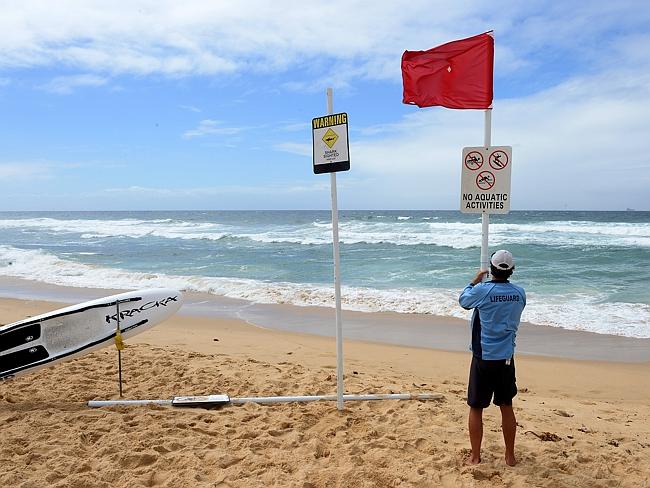
shark barThe beach was closed. A 5 metre white pointer shark was hanging around and there was a chatty excited buzz. My friend and I swam in an area protected by rocks. The sun was hot, the water cool, so beautiful we had two long swims.

Then we decided to shark-watch on the kiosk terrace. The cappuccinos were smooth and creamy. Mindful of my pact to write, I ordered an egg and bacon roll for lunch so I could go straight to work when I got home.bar beach cafe

The first thing I did at home was hang out the next load of washing. The newspaper lay on the coffee table and I flicked through the pages looking for articles about sharks. I lay on the lounge to read one. I felt a little sleepy and decided to have a short nap so I’d be brighter when I started writing…

Needless to say, I didn’t write that Monday. Or Tuesday. So I decided to start the next Monday.

Does any of this sound familiar to you? Maybe not the same events, but the similar pattern of life getting in the way of writing?

Jurgen suggests mapping your patterns of behaviour as you go through them. This will help you identify your patterns. The added benefit is that the act of writing it down can be enough of a pattern interruption that you go back to doing what you had originally planned.

I assigned this morning for writing this blog post. I noticed the washing again. Funny I only notice washing when I’m going to write?! I’m familiar with this pattern of behaviour now.

I’ve never had trouble make definite plans with myself about writing time. I recognise now that the difficulty lies in keeping them. So if something is about to change those plans or insert itself into those plans, now I ask myself, as I did this morning, “do you chose to do the laundry over writing?”

And here I am, writing.

The laundry will get done, just not in my writing time. I will have that coffee and swim with my friend, just not in my writing time. The way I work has become more productive because I’m more aware of my patterns of behaviour.

What I also had to learn was that I kept repeating those past negative patterns because I got something out of them. In two weeks’ time I’d like to explore that further on my blog.

Meanwhile I’d be very interested in hearing about the patterns of behaviour you discover.

Posted in Writing | Tagged , , , , , | 28 Comments

All is Not Well on the Australian Literary Front

carroll
Last Monday the Prime Minister’s Literary Awards Fiction Prize was split between Richard Flanagan for The Narrow Road to the Deep North and Steven Carroll for A World of Other People.

When Richard Flanagan gave the $40,000 prize money he received to the Indigenous Literary Foundation, the country applauded. In his award speech he gave two reasons for his generosity.

Firstly, the lesson his father took from the POW camps and imparted to him was that the measure of any civilised society was its willingness to look after its weakest.

Secondly, if Flanagan’s presence at the Awards means anything it is the power of literacy to change lives. The difference between him and his illiterate grandparents is two generations of free state education and literacy.

His stirring acceptance speech is available here.

However, information revealed in the aftermath has soured the awards. deep north w

Stephen Romei, Literary Editor of The Australian newspaper, reported that Prime Minister Tony Abbott overruled the judges’ unanimous selection of Carroll’s A World of Other People, deciding that the novel must share the award with Flanagan’s.

Poet and member of the judging panel, Les Murray, was thunderstruck when he heard the results on the night, claiming Carroll’s novel was the sole winner.

“It was nasty the way it was done,” Murray told The Australian. “I was shocked that they went behind the scenes and worked a swifty.”

The Australian obtained the official judges’ report to the Prime Minister and Murray’s comments were confirmed:

“The judges unanimously recommend that Steven Carroll’s A World of Other People be awarded the Prime Minister’s Literary Award for fiction.”

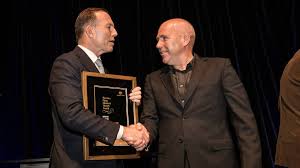
According to prize rules, the Australian prime minister has the right of “final decision” over the award’s selection. It was reported in The Australian that Prime Minister Tony Abbott exercised his prerogative to change the judges’ decision.

Tony Abbott & Richard Flanagan

Tony Abbott & Richard Flanagan


Whether or not Flanagan’s novel was good enough to win isn’t the discussion here.

There can be no doubt the Prime Minister’s Literary Award is one of the most lucrative in Australia. But what is now in doubt is whether it can still be seen as one of the most prestigious. These disclosures bring into question whether a novel should win because a panel of peers recognised its superior merit or because someone in power saw it as politically expedient? What is concerning is that the final selection made by an elected and eminent panel of people working in the literary field can be so easily over-ruled by the whim of someone who potentially has little knowledge of the complexities of writing.

Louise Adler, chairperson and judge of the fiction and poetry sections, lamented that judges were breaching confidentiality agreements by voicing in public their opposition to the “nasty surprise” they were confronted with.

Perhaps she should also consider the way the judges’ decision was over-ridden, the manner in which the change was revealed, and the opportunity for uninformed partiality to displace quality.

These are the things that need to be discussed.

Posted in Books, fiction | Tagged , , , , , | 22 Comments

Friday Fictioneers – 12 December 2014

It’s Friday Fictioneers time and it’s good to have time this week to play. Check out the blog run admirably by Rochelle Wiseoff-Field to learn all you need to know about Friday Fictioneers. From there you can link to the other stories inspired by the following photo.

Copyright - Sandra Crook

Copyright – Sandra Crook


Sticks and Stones

I’m not allowed to tell you why we moved out here. Or use my real name. Mum says, no way would she be hiding in this hell hole if she had a choice.

It’s not that bad.

There are more cows than people but the cattle dog next door follows me down to the waterhole for a swim most days. The creek’s banks are clogged with sticks and stones. I have to pick my way over them so my feet don’t get ripped to pieces. I don’t worry about that much. It’s names that could hurt us.

Posted in fiction, Short stories | Tagged , , , , | 28 Comments

What did we learn at a Writers’ Conference?

Joanna and Ron from lazuliportalswriting.wordpress.com attended the New Writers’ Conference at Plymouth University this month. The latest information they picked up from the sessions with publishers, agents and authors is valuable to every writer with a manuscript to publish.
Thanks for sharing this experience, Joanna and Ron.

Joanna (Lazuli Portals Trilogy)'s avatarThe Lazuli Portals

Ron and I attended the inaugural New Writers’ Conference held byLiterature Works, the literature development charity for South West England. It took place on Sunday 2 November, at Plymouth University.

The Conference was designed to assist writers who have the manuscript of their novel “ready to go” (or nearly so!) Professionals working in the industry gave advice and information on finding an agent, working with editors, getting a publishing deal, and marketing the book after publication.

Please follow this link if you’re interested in seeing the full programme of events.

I’ve picked three or four pieces of advice from each of the sessions (otherwise, as Ron will tell you, I will write pages….)

2014-11-02 10.04.47

Opening remarks by Tracey Guiry, CEO of Literature Works

 2014-11-02 10.26.49

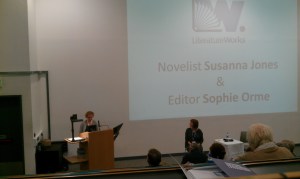
Pan MacMillan Senior Editor Sophie Orme (left) with novelist Susanna Jones 

  • Editing includes checking for issues with narrators, timelines, continuity, momentum, events, the…

View original post 874 more words

Posted in Uncategorized | 3 Comments

Knowing Vancouver Island

IMG_0039.JPG

Travelling seems to be either movement or waiting.

Waiting at airports. The check-in queue. The security queue. The flight lounge. Waiting for the long flights to finish in order to “do” things.

Then the movement. We’ve had five packed days in California visiting cousins and zipping around Napa Valley, and four days in Edmonton, Canada, staying with friends we haven’t seen for a year who are more like family. It’s been busy but lots of fun.

Yesterday we flew to Victoria on Vancouver Island, and today we visited a Fall Fair, a beautiful harbour, scenic lookouts, and the best coffee I’ve had in a cafe since we left Australia – Ottavio’s if you’re interested.

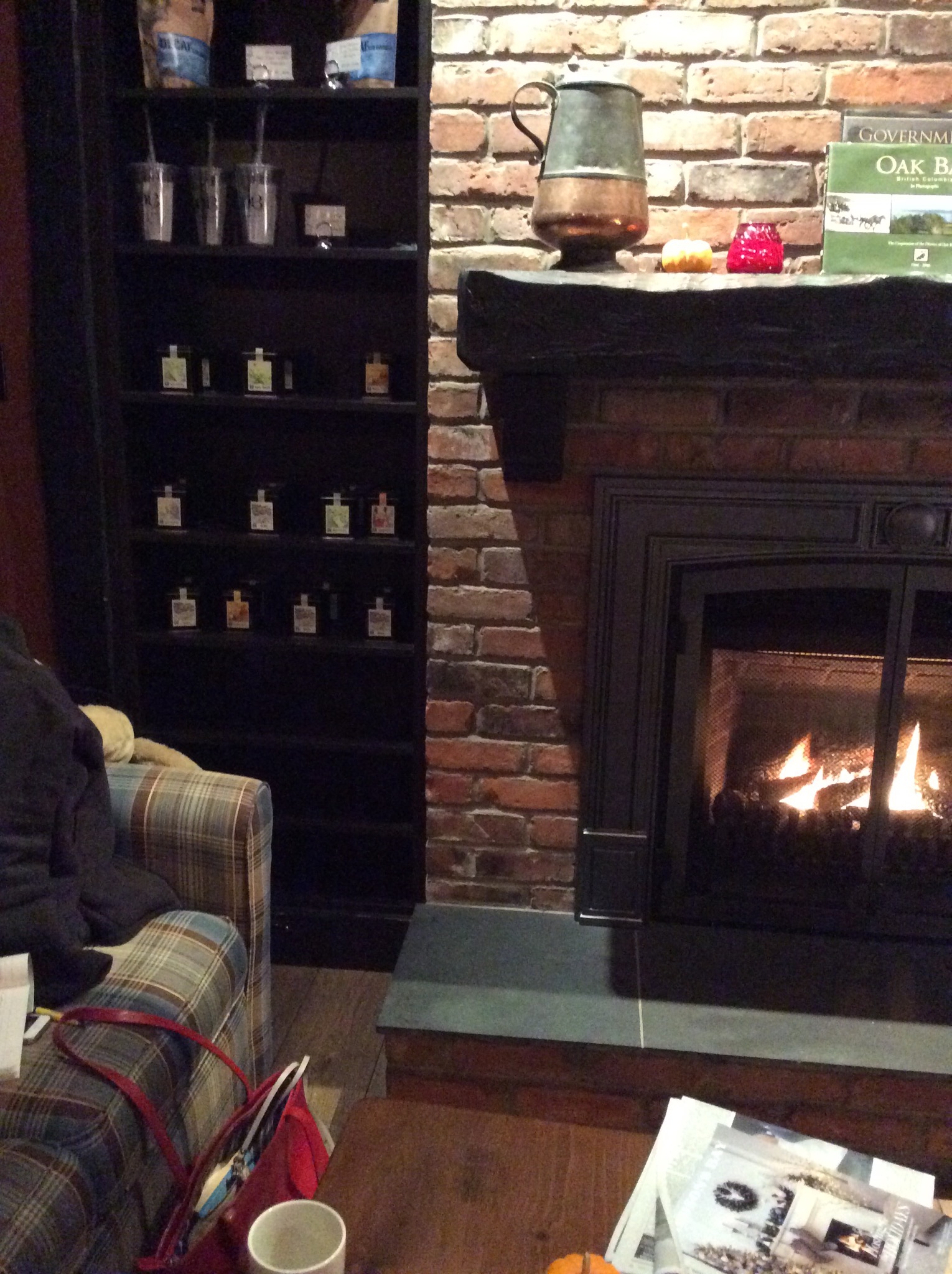
Back in the Oak Bay Hotel this afternoon our Canadian friends went to their room to rest and my husband went to our room to snore. The cafe, the fire, a good book, and a quiet hour to myself seemed my most appealing option.

I watched the flames flicker and my book lay unopened in my lap. There’s something stilling about fireplaces. I had nowhere to go, nothing I needed to see, no one else to please. I’d stopped moving and wasn’t waiting for anything.

Outside the sun was going down inconsiderately early and the temperature hovered around zero. People hurried past the window in Michelin Man jackets, knitted hats and cheeks raw from the wind.

Inside I snuggled into the checked sofa and my cheeks were flushed from the fire. I cupped a hot mug of English Breakfast, not for the warmth, but for the comfort of warmth.

It occurred to me then that this one still moment contained the whole of Victoria. Not just the warm snug I’d found in front of the fire, but also the tea and the taste of that rich coffee earlier in the day, and the pleasure of being with seldom seen friends. It held the mountain we climbed and the bitter whip of the wind, the mist and the snow capped peaks across the water.

It seems to suggest that true travel mightn’t be, as the word suggests, about movement. Maybe it’s in the still moments, when you step back from all the rushing and doing, that you see what’s around you more clearly. Maybe you need that stillness to give space for the separate elements to cohere into a whole picture of what a place means to you.

Posted in Travel | Tagged , , , , , , | 11 Comments

Newcastle Herald Short Story Competition

herald story

THE Newcastle Herald is inviting writers from across the Hunter to enter its third annual short story competition. The twenty-five shortlisted stories will be published in the Herald from December 26 to January 23. Stories must be inspired by one of the four photographs above.

Submissions must be between 800 and 1000 words and participants must be residents of the Hunter Region.

A winner and two highly commended entrants will be selected.

The winner will be rewarded with a library of 50 new-release books valued at $900, a weekend pass to the 2015 Newcastle Writers Festival in March, as well as a Kobo Touch e-reader and silicon case package valued at $110, courtesy of Domayne Kotara.

The two highly commended entrants will each receive a $150 voucher from MacLean’s Booksellers, Hamilton.

Read the conditions of the competition and find larger copies of the photos here and submit your entry as an emailed attachment to summerherald@theherald.com.au by 9am on Monday, November 24.

Good luck!

Posted in competitions, Short stories, Writing | Tagged , , , , | 3 Comments

Friday Fictioneers – 24 October

It’s Friday Fictioneers time and it’s good to have time this week to play. Check out the blog run admirably by Rochelle Wiseoff-Field to learn all you need to know about Friday Fictioneers. From there you can link to the other stories inspired by the following photo.

copyright - The Reclining Gentleman

copyright – The Reclining Gentleman

The Rendez-vous

On a winter’s morning I turn up at the lake half an hour early with my neighbour’s dachshund for disguise. The wind nips my gloveless fingers and makes my eyes stream. The clouds hold onto their rain.

I attempt inconspicuousness, a common dog walker, in spite of the mutt whimpering and pulling for home, and even though the father I’m meeting doesn’t know me. Rejection has become my choice.

After an hour no one has come into the park. No one sat on the third bench from the corner in front of the nature display.

The dog howls, the clouds cry and I still wait.

Posted in fiction, Short stories | Tagged , , , , | 38 Comments

Richard Flanagan on his Man Booker winner

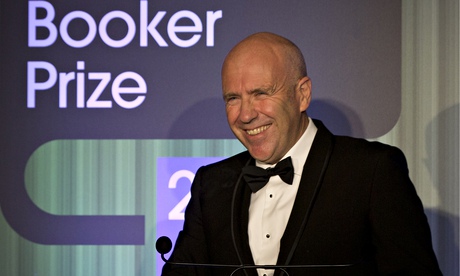
Breaking News: Richard Flanagan won the 2014 Man Booker with his novel The Narrow Road to the Deep North.

Richard Flanagan wins the Booker prize

This morning I listened to his interview with Guardian Books. The first thing that struck me was here was someone who actually spoke in perfectly formed eloquent sentences! But then I concentrated on what he had to say. This short extract from a longer interview awed me.

“Every book is just a crack diary of your soul for the time you write it. I don’t feel this book is any more or less personal than Gould’s Book of Fish.

I think you strive to find a form, a voice, that allows you to achieve a transparency between your soul and your words, but the great sin for a novelist, for any artist really, is to allow those forms to become fixed and permanent because your soul is constantly in flux, and to use the same tropes, the same voice, the same style is inevitably then to be using something that once told a truth but which becomes a lie, and at that point you’ve cheated your reader. So as your soul constantly moves so must the forms you employ. So stylistically, in terms of its subject matter, it is entirely different from Gould’s but it’s true to the same sense that I have that writing is essentially about seeking to discover within your own soul, the universe – you know, all people, all things, the living and the dead – and finding through the story, the character, the way of communicating the incommunicable things we all carry within us.”

deep north wThe rest of the interview can be heard here. Critics Alex Clark and Stuart Kelly discuss the results of the Man Booker before Richard Flanagan reads from The Narrow Road to the Deep North and then answers questions on how he came to write it.

Posted in Books, fiction | Tagged , , , , | 4 Comments

“The Blog Hop” & “My Writing Process Q & A Tour”

C.S. LewisMarg from Marg’s Slices of Life passed The Blog Hop onto me. While I was thinking about the questions she sent, Joanna and Ron from The Lazuli Portals nominated me for My Writing Process Q & A Tour. As the questions were almost identical I thought I’d answer both with the same post. I’m very honoured to be chosen by these people whose blogs and writing I admire so much.

1. Why do I write?

I write because I love words. I love how precise and powerful they are. I find it fascinating that we can line words up one after another in a particular order and we can make people laugh, cry, become frightened or astounded, and almost any other emotion it’s possible for humans to feel.
I love the pattern, shape, sound and rhythm of words.
I write so I know what I think.
I write because I want to share with other people the way I see our quirky and astonishing world. I express things more clearly in writing than I do speaking. There’s less room for confusion and being misunderstood.
I write because I love the challenges it presents.

2. Why do I write what I do?

I write short stories of any length. In short stories I can concentrate on one aspect of the human condition in greater detail. People, their psychology, motivations and behaviour, fascinate me. That’s why all my stories are character based, and why I stare at people a lot. I particularly enjoy writing about life’s ironies. My stories usually contain humour, but underneath I’m seriously questioning something I’ve observed about the way we live.

3. What am I working on?

I work on whatever excites me. I know that’s very indulgent but I think if I’m not passionate about what I’m writing how can I expect anyone else to be. I have some stories about eccentric characters I’ve grown to love and when I have enough I will turn them into a discontinuous narrative. I love reading novels about the same world from all different perspectives so the idea of writing one interests me.

4. How does your writing process work?

I start each writing session with a timed writing exercise. The most difficult thing for me to do is physically start. So I tell myself if I write for 20 minutes I’ve done my daily writing. But once I’ve started I don’t want to stop. The writing exercise might be to explore something in the story I’m working on that I need to think about more, or it might be free writing.
The first draft is agony. Once the ideas are on paper and I know what I want to say I love it. I love the crafting and dreaming deeper into the story, discovering the things my subconscious has already embedded in the text. This is the magical exciting time when I get to play with choosing and arranging words that will express these ideas the best way I can. Once my idea is crystal clear the words often write themselves, though. When that happens it’s the most amazing high. That’s what keeps me writing.

oconnor quote
I know I’m suppose to nominate 3 bloggers to take on the task of answering these questions about their writing, but I decided to open it up to any writer who reads my blog. I’m intrigued by how other people write, and I learn so much from reading or listening to authors. It’s also extremely helpful to make yourself think about why you write and how. I learned things from answering these questions about my writing that I didn’t know about myself before.

Whatever you decide to do, keep writing!

Posted in Short stories, Writing | Tagged , , , , , , | 7 Comments

Writers are Observers

cropped rainbow
The rain storms over the past week have lit up our sky with rainbows. Many of them have been perfect arches in full vibrant colours crisply delineated. Some have been double rainbows.

When I was standing in the park photographing this rainbow last week I was only dimly aware of what was going on around me. Then I heard a low rumble and looked up. The clouds were purple and black. A cold gust, the wind that comes before a downpour, blew my hair back into my face. I smelt the clean of damp earth. I ran for the safety of the veranda but my body was pelted with large cold drops that shivered down my scalp.

While the photo shows what I saw, it was only a part of my experience. The colours and magic of the rainbows were beautiful, but it was the whole exhilarating experience that excited me. The smell of rain and the huge drops, the sound of thunder, the force of the wind, the cold, and the trepidation and thrill of being caught in a storm.

Sight is often our dominate sense but when we use our whole body and mind to attend to and experience our daily lives we go beyond the ordinary way of seeing and being.

The writers I admire most have this ability to take me into the whole experience. See my last post Expanding the Moment for examples of the work of two writers that achieve this.

They take me into the experience they’re describing as if I’m right there right now. They write with brilliant skill, but it’s more than that. It’s their ability to pay attention to the small details, to actually experience directly and intimately, and then express, not what they think is there, but what actually is. This is what absorbs me into the world they’ve created. This is what makes me feel as if I’m right there with the characters.

A few people may naturally have a highly developed sense of observation. Most of us, though, need to consciously practise to hone this skill.

Here are two exercises I found helpful.

1. Go somewhere, to a café or park. Write for 15 minutes without stopping. Write what you see, hear, feel, smell, and taste. Don’t write about your feelings or thoughts or what your opinion and judgements are. Write about the colours and shapes. The smell of coffee, the taste of Greek shortbreads.

This exercise will connect you to the here and now. It’s a sensory exploration of the specific place you are in at that particular time. It will force you to really pay attention to details you may never have noticed before, or that weren’t quite as you believed them to be.

2. Take an ordinary object. Experience its physical existence, without naming, analysing, judging or evaluating it. Just feel it. See it. Touch it. Experience it without the mind moving. When you find your mind moving, acknowledge the thought, let it go, and come back to the object.

This exercise comes from John Daido Loori’s book The Zen of Creativity. The more you practise this exercise the more you’ll develop the ability to experience things directly, without evaluation. You’ll be able to just see, hear, feel, taste, smell.

And, as your attentiveness and awareness increase with this practice, you will notice little things that you have been seeing every day but barely noticed in passing.

Because ultimately we want our readers to lose themselves in our world, to experience exactly what it’s like for our characters to have this experience at this particular time in this specific place. To make our readers feel they are there.

T S Eliot expressed it perfectly:

“Music heard so deeply that it is not heard at all, but you are the music.”

Posted in Writing | Tagged , , , , , , , | 10 Comments