More Readings of Place

moutain top viewI can’t stop mulling over David Malouf’s idea about how we apply what we learned about dimensions and space in our earliest childhood to whatever else we go on to look at.

When I think about my childhood home I think about wide horizons and huge sky. We lived on top of a hill, separated from the houses below us by a sudden sharp incline. There were five houses scattered along one side of the road on the ridge. Ours was the first. Then Old Jack’s, a shuffling man of 90, who lived in a one room timber shack surrounded by a small orchard of plums and apples, and who kept lollies in a glass jar for us kids when we chopped wood for his stove. On the other side of him lived an exotic Polish family with three boys who emigrated after the war. Our brood of cousins were next to them and then Young Jack, who was on the wrong side of middle-age.

This formed my earliest community, the place I unquestionably belonged and felt safe, an eyrie separated from the rest of the world which I could see stretching out below us and far into the distance.

So what did I learn about space from growing up here?
bushfire
I learned it was so open-ended and vast my place in it was insignificant. During the day we had a boundless sky and at night the mysterious sweep of a universe. In sweltering summers we would wait longingly for the bruised and angry clouds of a southerly buster to storm over the horizon, and to the west and the north watch the smoke from the bushfires billow above the ranges or streaking their bloody reflection on the night sky. These were also hints there were mysterious, exciting and frightening places beyond what I could see.

desertThe first time I became aware of a different set of spacial understandings was when I became friends with a Japanese exchange student who attended my secondary school for a year. During a holiday break he was taken to the centre of Australia and Uluru and came back shattered. His voice quivered as he told me about standing on the Nullarbor Plains. In every direction the desert stretched all the way to the horizon, and he could even see the curvature of the earth. He was so terrified and dizzy he threw himself on the ground and clung to a tussock of spinifex. As he told me he stared like a petrified kangaroo in the headlights.

I tried without success to imagine his fear. Awe, yes. But terror? His English was poor but in an attempt to explain his fear to me he put his hand up in front of his eyes saying “Tokyo is tall buildings” and “mountains”.

A few years ago I achieved my dream of finally stepping onto every continent on earth.

Antarctica 1144Antarctica. It was ravagingly beautiful. Icebergs of such a pale blue they seemed transparent. Brilliant white light as if a magic spell had just been cast or we were in the middle of a holy visitation. Antarctica was frightening in the sense of being savage and icily indifferent to life, the conditions so unforgiving and volatile no man could survive in them unaided.

But it was also familiar. The wide sky. An ancient continent where geographical timelessness is everywhere apparent. The insignificance of man and his transience. An awe so overwhelming it’s sometimes painful to contain it. Antarctica 1341

While I can see now that I apply my earliest readings about space and dimensions to where-ever else I go, something else happens too. Other places force me to look again at the place where I grew up, the place that shaped me as my Japanese friend’s space shaped him, the place that is so familiar and ordinary to me I often take it for granted. When I look at the place where I live with the new understandings I’ve gained, I see just how complex and strange, and how extraordinary it is.
IMG_8037

Posted in Travel, Uncategorized | Tagged , , , , | 2 Comments

Characters in Place

jon snow

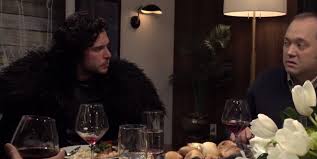
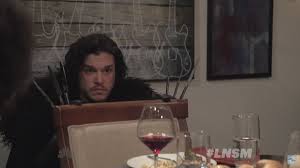
Jon Snow from Game of Thrones was invited to a swish New York dinner party. Incongruous? Absolutely.

Watch the video clip of the dinner. It’s hilarious.

I laugh out loud every time I think of it, yet something about it unsettles me. I admit to being in love with Jon Snow and while I hate to see him ridiculed I don’t want to whip out my sword and decapitate Seth Meyers for doing it. It’s not often I’ve had such a good belly laugh.

Why then does it gnaw at me? I think my discomfort has something to do with the disparity between character and place. In Westeros, life’s hard and so is Jon Snow when he needs to be. But he’s ethical, moral and brave, strong and compassionate. Beautiful to look at in that dark rugged way. Excuse me for a minute while I swoon.

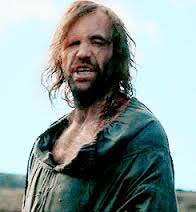
Around a New York dining table set with white linen, crystal wine glasses, and guests who are respectful and polite, and excel in small talk, Jon Snow fits in as easily as The Hound in a beauty contest. the hound yes

The problem arises because Jon Snow is inseparable from the world George R R Martin invented. Of course I know this world doesn’t exist, although we Throners talk about it as if it does. By forcing us to watch this character play out in the realistic and familiar world we live in, we are jolted into acknowledging the novel’s illusoriness.

If a world is as richly and deeply imagined as Westeros, and adheres to it’s own set of consistent rules and principles, we readers rarely notice the subconscious agreement we make to suspend disbelief. Only when a novel is particularly clumsy and badly wrought, or when comedians satirize as Meyers has in this sketch, is the artifice bluntly obvious and impossible to ignore. That incongruity can create fabulous humour.

This skit shows me how important it is for us as writers of fiction to make the imagined world our characters inhabit seem real, even if the story takes place in a fantasy world. We must construct a place of meaning out of carefully selected concrete details. And importantly we must convince our reader to believe in this world, regardless of whether it’s a world that resembles the real world we live in or one where dragons fly and men build walls of ice 700 ft tall and 300 miles long.

snow knives2Our characters must be so tied to this place we invent that if they packed their bags and took themselves off somewhere else they would be so out of place as to be ridiculous.

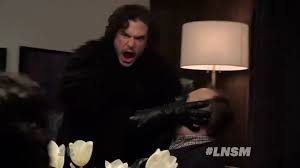
Which gets to the heart of my discomfort. When Jon Snow packed his black crow’s coat and accepted Meyers’ invitation to a dinner party in New York City, he became ridiculous. Hilarious, but ridiculous. It’s not that Jon Snow speaks or acts differently in New York than he does in Westeros. Most of what he says is in the novels. Only the place changes. The way he interacts with New York society is not appropriate, and we’re forced to read him differently. I now suspect he’s suffering from socially-dysfunctional depressive paranoid psychosis.
snow knives 3

George R R Martin created such a convincing world inside the novel I suspended my disbelief. So when Meyers showed me the extent to which this world and the people in it were not only totally unrealistic but ludicrous, I felt a little silly for falling for it.

Of course, in one way every novel is unrealistic. The characters aren’t flesh and blood, the landscapes they inhabit are made of up of words on paper or screen. Every novel demands us to suspend disbelief.

So I know just the thing to help me over this forced rude awakening: a Game of Thrones Marathon.

Posted in Books, writing process | Tagged , , , , , , | 8 Comments

Readings of Place

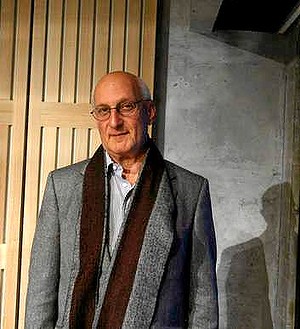
David Malouf

David Malouf

In Writers in Action, David Malouf says we learn about dimensions and space from our first readings of the place in which we grow up, and we go on to apply that to whatever else we look at.

One part of his mind expects that “every city is a city of hills like Brisbane: where you go up and down and where, when you get to the top of the street, you see something new…”

His friend from Adelaide thinks “cities are flat. He really did think that if you looked down a street you ought to be able to see all the way to the end of it…”

Malouf believes that we are deeply determined by such factors. He challenges us to think about the place we came from, the house we lived in, and ask ourselves what our initiation into reality was in our first house – not just the shape of the rooms, the architecture of it, but also the objects that were in it, the kind of mythology and history it contained, and the way all of these factors lead us out into the world.
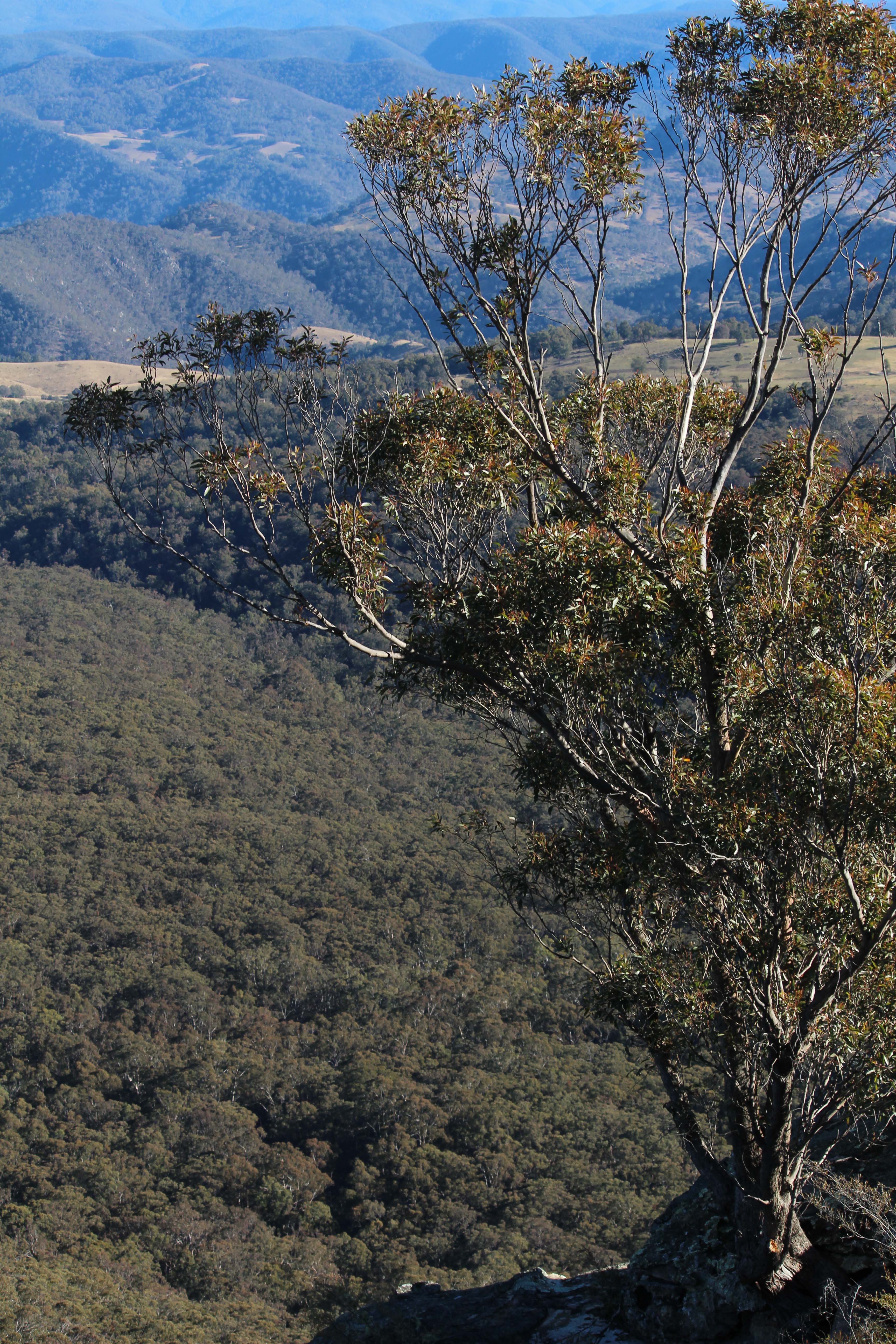
australian bush (2)
I took up the challenge and sat down to write about the place where I grew up. The house started out as one room which my father built for my mother when they were first married. It was situated on top of a ridge with views over the trees to the village in the valley. I still remember the steep dirt road where deep gutters were gouged out by the rain, deep enough to swallow unwary cars.

With each new baby my father built on a new room. I remember watching the construction: the trenches and string, the course of bricks on concrete, the timber frame and the tin roof, the timber floorboards, wooden walls with plastic wires threaded through, and the thick chalky smell of gyprock and plaster.

My father had no final vision of what our house would look like. I’m sure when he built that first room for my mother he couldn’t have envisaged it would one day flow out to a huge lounge room at the back and internal stairs down to an art studio that led out into the back yard.

And while I wrote about this house I started to see how the way I construct my stories is the same way my father constructed our house. Instead of bricks and timber I use words and sentences, one after the other, building without knowing what I will eventually end up with. When the shape emerges and I can finally see its form, I build onto it and into it, threading the elements through like electric wires. Like every builder I’ve ever known it can take me some time before the door handles are on and the paint spots cleaned off the windows for a clear view.

Perhaps this is why I start by writing without a plan, and the writing turns into scenes, and the scenes suggest new scenes, which grow finally into a story. Just as the rooms my father built led to more rooms and finally a large rambling house.

In the next few weeks I’ll take up the second part of Malouf’s challenge and think about the objects, mythology and history contained in my first house, and the way all these factors led me out into the world, so I might understand how my first view of culture might come through them.

I invite you to take up the challenge with me and let me know what you discover.

Posted in Short stories, Writing | Tagged , , , , , | 11 Comments

Sydney Writers’ Festival 2015 – On Home and Exile

sydney writers festival

It’s pouring. We wait outside the Philharmonic Studio on the wharf for the session On Exile and Home where an organiser pokes the bulge full of water in the canvas roof and a waterfall cascades over the edge. The water splatters on the concrete and sprays us.

Inside it’s dry, except for my socks.

Moderator Michaela Kalowski starts by asking the panellists how they think of exile. Zia Haider Rahman, Tommy Wieringa and Assaf Gavron tease out the idea in rapid fire. There’s the literal meaning, the metaphoric, ostracism, geographic, class based, exile from self, loneliness, linguistic…

Rahman adds that exile can be seen as separation even when you don’t know from what.

Zia Haider Rahman

Zia Haider Rahman

I miss the next bit of conversation because I’m watching him closely and thinking about why he might say that. To look at him sitting comfortably up on the stage, stylish in a smart cut blazer and collarless jumper, speaking quietly and confidently, his chin tilted up, looking towards the ceiling as if he’s weighing up what’s being said, it’s hard to believe he can possibly feel unsure about anything.

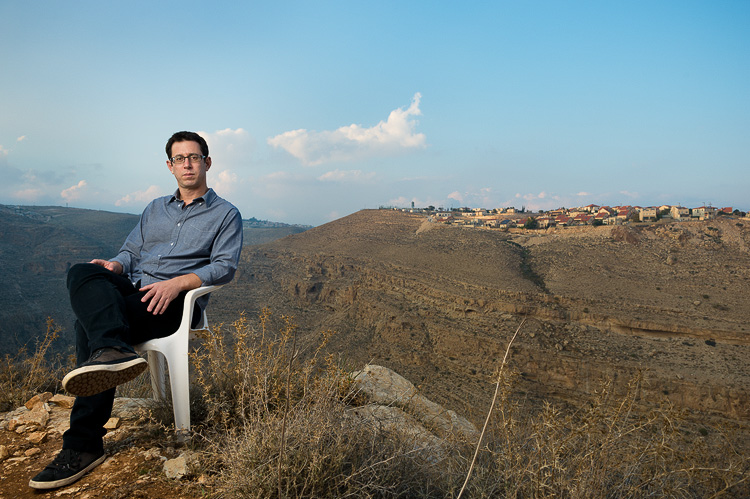
Assaf Gavron

Assaf Gavron

He listens as Assaf Gavron tells us about his Jewish parents. They were British and had moved to Israel before Gavron was born in 1968. Gavron says he was extremely conscious of growing up in an immigrant household. His parents stood out with their strong English accents. He is very conscious that as the Jews came home to Jerusalem from exile, it has caused the exile of others. Gavron says he has a need to continually leave Israel but he always comes back, but he lives with the sense of not belonging completely.

Tommy Wieringa

Tommy Wieringa

Rahman nods and smiles as Tommy Wieringa talks about leaving the Dutch Indies at the age of ten when his parents moved back to Holland. Weiringa felt he didn’t belong until he found a book on the nature of the new world thrust upon him, and through the birds, plants, trees, animals he started to develop an affinity with his new home.

Rahman says quietly to the ceiling. “The yearning for homeland presupposes that we belong somewhere.”

The room is silenced.

Rahman tells us he was a refugee from the Bangladeshi War. He and his parents escaped to Britain when he was very young and he grew up in council housing. Now a human-rights lawyer, Rahman has a few material processions in storage and no place to call home. He wrote his novel, In the Light of What We Know, between New York State and France, and refuses to live in England. novel zia

The panel draws a distinction between the personal and national ideas of home and homeland. But I can’t stop thinking about what it must feel like to believe you don’t belong anywhere and of the quote by Edward Said that Rahman included in his novel,

“Exile is strangely compelling to think about but terrible to experience. It is the unhealable rift forced between a human being and a native place, between the self and its true home: its essential sadness can never be surmounted. And while it is true that literature and history contain heroic, romantic, glorious, even triumphant episodes in an exile’s life, these are no more than efforts meant to overcome the crippling sorrow of estrangement.”

I can’t tell you about the rest of the session. My mind is whirling through the raw brutality of what exile means to Zia Haider Rahman. It creates a fullness deep in my throat I can’t seem to swallow.

For if exile creates a rift between a human being and a native place, between a self and its true home, how much worse must it be for Rahman, a man who believes he has neither a native place nor a true home, a man who may not know what he is separated from.

Posted in Books, fiction | Tagged , , , , , , , | 5 Comments

Literary journal OVERLAND wants your fiction

Progressive and respected literary journal Overland wants fiction from new and emerging writers for a special online edition.

WE WANT YOUR FICTON

By Editorial team
22.Apr.15
Overland is seeking fiction from new and emerging writers for a special online edition to be curated by Rachel Hennessy. For this special edition, ‘new and emerging’ describes a writer who has not yet published a book of stories or novel with commercial distribution. Online contributors for this edition will be paid $120 per story.

hennessy_headshot_250Rachel Hennessy’s first novel, The Quakers (2008), was described by John Birmingham as ‘un-put-down-able’. Her second novel, The Heaven I Swallowed (2013), was runner-up in the Vogel Award and subsequently long-listed for the Kibble Award for an established female Australian writer. She works as a tutor in Creative Writing at the University of Melbourne, as an assessor for Writers Victoria and is on the Arts Victoria literature panel.

Submissions close midnight, Sunday 10 May. The special issue will be available online in June.

Submit your story under the ‘For online’ category on the fiction submissions page, or read one of the previous special issues on OVERLAND’s website.

Posted in competitions, fiction | Tagged , , , , , | Leave a comment

Just Write

gaiman
It’s one thing to actually force yourself to observe your writing habits. It’s harder to take the next step of understanding why you behave in ways that are obviously counter-productive, and then finding positive ways to get what these negative behaviours provide.

I’ve blogged about this process and what I learned in previous posts, Recognising Writing Behavioural Patterns and Changing Negative Behavioural Patterns – Part II.

One of the problems of following these well-intentioned plans is that after a while we lose momentum. I started this process of understanding my patterns of behaviour three months ago. So did I fall off the wagon?

No, but the most valuable gains were things I hadn’t expected.

Firstly, the thrill of writing is back. I hadn’t lost the enjoyment of writing, but without realising it I had lost the bliss.

I started this process because I wanted to be more productive. Am I? Oh, YES. I’m creating more writing that I think is good, and I’m also producing more writing that’s terrible. But that stands to reason, and I’ve learned to just accept it.

It’s not possible for me to write every day, but because I now TRUST myself to write when I can, I don’t feel bad when I don’t.

But for the last few weeks something wonderful has happened as a consequence of the introspection, the persistence and the challenges of the last few months.

I started to JUST DO IT.

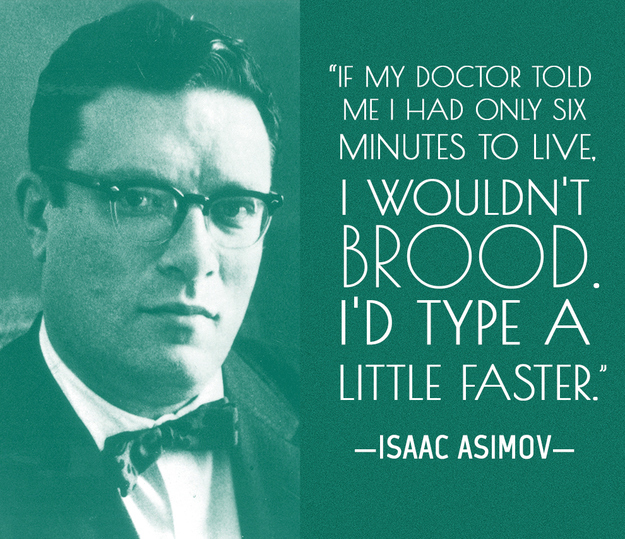
I know that’s not a new concept. I’ve read many authors who advise us to JUST WRITE, but as an analytical thinking personality I had trouble getting my head around it – or perhaps I should say feeling it. asimov

Now I don’t think about writing. When I have time, I just sit and write. It’s freeing and light and exciting. It’s self-perpetuating.

But that ability didn’t come from willing it to be so. I would never have got to that place without the hard work of recognising my behavioural patterns and then replacing the negative behaviours with positive ones that gave me the same benefits.

This is a short post because I’ve got to get back to writing.

I’d love to hear your stories.

Posted in Writing, writing process | Tagged , , , , , | 7 Comments

Catchfire Press Competition

home-is-the-hunter-featured-image-600x316Catchfire Press is at it again! They’re asking for stories (fiction or non-fiction), poems and essays for their latest competition: Theme – ‘Home is the Hunter.’

This community-based publishing house will not only publish the winners but also select the best work from the competition to be included in the anthology, which also includes work by invited established writers. It’s a terrific opportunity for emerging writers.

Competition guidelines and entry form are available on the Catchfire Press website.

Catchfire Press is also inviting submissions for the cover design of the book, ‘Home is the Hunter’. There will be a $200 prize for the winning entry and no entry fee. Details can be found here.

If you live in or have a connection to the Hunter, send your work to Catchfire Press before the closing date, 31st October 2015.

Prose (200 – 2000 word limit)
Poetry (up to 100 lines)

In each category:
First place – $350
Second place – $250
Commendations will be awarded

How many ways are there to celebrate what the Hunter Valley means to you? Every family has a story about coming to the Hunter. From the earliest of times, people have been moving into the valley and making it their home. They have been attracted by the beauty and bounty of the place, sought refuge from war and adversity, followed job opportunities, gathered together with their families or come just to enjoy the lifestyle. Share your love, laughter, pain and tears with our readers.” Catchfire Press

throughthevalleyWatermark1

Posted in Books, competitions | Tagged , , , , | 1 Comment

The Book that Changed Me

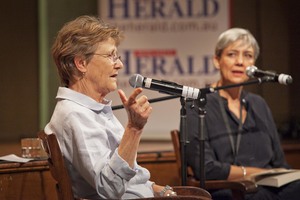
Helen Garner with Caroline Baum

Helen Garner with Caroline Baum

The opening session at the Newcastle Writers Festival was titled The Book that Changed Me with Helen Garner, Michael Robotham and Jessica Rudd in conversation with Caroline Baum.

Baum led the way through a glad bag of topics, and at times sat back while the panellists diverged and asked each other questions. Not that the ensuing discussions weren’t interesting: what did the authors read when they were ensconced in writing a book? What made a great book? Did the lives of favourite authors influence their lives? What films are better than their books? What were the downfalls and advantages of making contact with admired authors? Do characters have to be likeable?

But back to the topic…

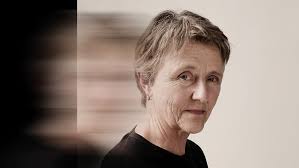
helen garnerHelen Garner’s list
Children’s Encyclopaedia
Hemingway’s Movable Feast
Charles Reznikoff’s Testimony
Photographs of the crime scenes held at the Justice & Police Museum in Sydney.

How did these books change Helen Garner?

Poet Charles Reznikoff read court documents from the holocaust trials and compressed the stories into short sincere and objective pieces published as Testimony. The same striving for objectivity and sincerity are a powerful force in Garner’s own courtroom non-fiction.

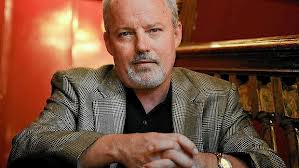
michael robothomMichael Robotham’s list

Hemingway’s Movable Feast
Ray Bradbury’s Fahrenheit 451
John Irving‘s novels

How was Michael Robotham changed by these books?

As young man Robotham wanted to be Hemingway. He went to Paris to visit the places Hemingway mentioned in this memoir about 1920’s Paris. He walked down Hemingway’s streets, visited the places he lived, wrote in the cafes where Hemingway had written.

Garner asked Robotham if it was a male thing to model yourself on another writer. Women don’t do that, she said. Off topic perhaps, but what an interesting notion. Unfortunately it wasn’t taken up.

Michael Robotham related a lovely story about his contact with Ray Bradbury that certainly changed his life. After reading all Bradbury’s books available in Australian by the time he was eight or nine, Robotham wrote to Mr Bradbury, care of Random House in New York, to lament the problem.

Months passed and one day Robotham came home from school and sitting on the kitchen table was a brown paper parcel that contained the five titles he couldn’t get, along with a letter from Bradbury saying how thrilled he was to have a fan on the other side of the world. From that moment Robotham decided he wanted to be a writer.

Last year, Robotham wrote about that encounter for a publisher’s website in the US, saying he regarded Bradbury as his literary father. Shortly after, he got an email from Bradbury’s daughter, saying that she had read the piece to her 91-year-old father who was blind; she said he cried as he listened to what Robotham had written. He wanted Robotham to know that he considered him his honorary son. Robotham planned to visit Bradbury when he went to the states later in the year but sadly Bradbury died a month before the visit.

jess ruddJessica Rudd’s list

Jane Austen’s Pride and Prejudice
Caitlin Moran’s How to be a Woman
Joe Klein’s Primary Colours

When Rudd was 18 years old she read Primary Colours and was horrified by the cynical portrayal of politics that focused on power. In her view it totally missed the point of politics: to make a better place. Her Ruby books came out of wanting to present that alternative focus of political purpose.

So what was the book that changed my life? The Alexandria Quartet by Lawrence Durrell.

alexandria

I was in my early 20s when I read the 1st novel in the quartet – Justine – a first person narration by an Irishman about his affair with his friend’s exotic Jewish wife. Then I read the 2nd – Balthazar – and heard a completely different view of the same events told by a competing narrator.

By the time I got to the last novel I understood probably for the first time that life contains no such thing as a definitive reality. These characters had all lived through the same events but their perspectives were completely different, limited in alarming degrees by their personalities, their own experiences and their knowledge of what shaped these events. The last novel in the series, Clea, is set six years later. The effects of time revealed another layer to the events.

Some people could say I still don’t have a grasp on reality today. If ever I do get a grip on it, pin it down and tie it up so it can’t move, that’s when I’ll start to worry.

A year after reading The Alexandria Quartet, and because of reading the book, I got on a plane to Egypt. Now that changed my life in more ways than it’s possible to relate here.

What is the book that changed your life? How?

Posted in Books, Newcastle Writers Festival | Tagged , , , , , | 5 Comments

Newcastle Writers Festival 20-22 March

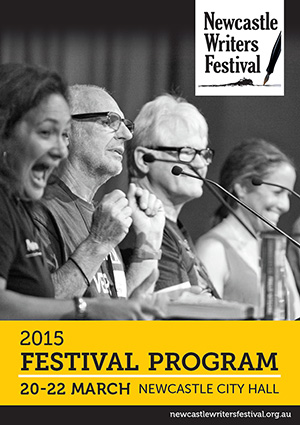
nwf2015-programcover-smlThis year’s lineup at the 2015 Newcastle Writers Festival at Newcastle City Hall will thrill any book lover. A taste of the talent: Helen Garner, Marion Halligan, Favel Parrett, Bob Brown, Michael Robotham, Les Murray, and proudly standing alongside them are locals Claire Dunn, Wendy James, Ed Wright, Jean Kent, Michael Sala, Judy Johnson…

The OPENING NIGHT EVENT is hosted by Caroline Baum. Helen Garner, Jessica Rudd and Michael Robotham will talk about the fascinating topic The Book that Changed Me. This already has me trying to decide which book I’d pick.

The full programme is online at Newcastle Writers Festival.

For anyone wanting to send their writing further than their bottom drawer The Next Level: How to take your writing from hobby to publication – Sunday 22 3pm – shouldn’t be missed. With awards in major competitions and work in a variety of online and print markets, these talented emerging writers have valuable experience and tips to share.

Thank you, Rosemarie Milsom and team, for an exciting programme.

Posted in Books, Newcastle Writers Festival | Tagged , , , , | 12 Comments

Changing Negative Behavioural Patterns – Part II

We often blame procrastination when it’s our behavioural patterns that stop us doing the things we genuinely want to do. My last post, Recognising Writing Behavioural Patterns, was all about mapping and recognising these patterns as a way to changing them.

And while it was fun and I had quite a few light bulb moments, the next crucial step advocated by Jurgen Wolff, in Your Writing Coach, was confronting.
your-writing-coach-book

‘When you’ve identified a pattern, it can be useful to identify what it’s giving you. Normally, it will be some kind of protection, often a protection from needing to face change, which is uncomfortable initially and sometimes very scary indeed.’

So what was I getting out of sabotaging my efforts to write?

Wolff claims there are Seven Big Fears that cause us to stagnate.

• rejection
• not being good enough
• succeeding
• revealing too much of yourself
• only having one book in you
• being to old
• overwhelmed by research

You know how you look up a medical text book to find out what’s wrong with you, and by the time you’re finished you’re riddled with illnesses? Well, I have six of Wolff’s fears, and should have become a researcher.

But when I came to one particular fears my chest tightened and I got that awful sinking feeling. I knew then why I accepted every invitation ‘life’ put in my way so I could put off writing. I knew exactly what I was protecting myself from.

Not being good enough, not reaching the high standard of writing I aim to achieve, terrifies me. Somewhere in my twisted subconscious I came to the conclusion that if I didn’t write, then technically, I couldn’t fail to reach those standards. So the pattern of avoidance I set up for myself was doing an amazing job of protecting me from that fear of failure.

I know from mapping my patterns of behaviour that it’s in the last stages of writing everything goes pear shaped. That is, when I allow myself to write. I am never at a loss for ideas. Writer’s block isn’t my problem. I fight my way through first drafts – never a fun period for me – with stoicism, determination and hopeful anticipation. Second drafts are ecstasy. But somewhere between the final edits and the polish I stop writing. I have a hundred stories floating around my computer waiting for a fine sand.

The solution seems obvious now. But no less frightening.

Wolff offers a suggestion.

‘When you have identified what the payoff is, you can generate alternatives for getting the same benefits in more benign ways.’

So I decide to make a pact with myself that has protection built into it.

I’m working on a story now that’s into the exciting second-draft stage. I have made a pact with myself to finish it. Right to ‘read-through-an-editor’s-eyes’ completion. Only then will I decide whether it’s ‘good enough.’ If I’m not sure how reliable my judgement is, I will ask a valued writer friend if she will read it. Her feedback is always constructive, honest and astute, and she does it kindly. After I receive her comments then I’ll decide whether to send my story to a publication. At each step I have control over who reads my story.

I’m already getting an unforseen benefit from this pact. Miraculously, I’m not thinking about whether this story will be ‘good enough.’ I’m writing almost every day for the pleasure and the challenge of it. I’m excited to see how far I can take it towards my ideal. Whether anyone else sees it is my choice. AT EVERY STEP.

This solution seems to be working for me.

Your fears and the negative patterns you’ve developed to protect yourself may be different. The solution you come up with will reflect that difference. You may not come up with the right solution the first time. Treat it as research for ways of working that suit you.

The key point Wolff makes about patterns and payoffs is important.

‘It’s not enough just to change your pattern, you must also change it in a way that also gives you the payoff that was provided by the old pattern.’

I’m eager to hear about your experiences and the solutions you’ve found that change your negative patterns and the payoffs into positive ones. Please drop me a line.

Posted in Writing, writing process | Tagged , , , , | 23 Comments