Reading in Public

I stand in front of an audience clutching my stories in my shaking hands. My voice trembles in sympathy. You’d think I’d be used to it by now, but no, reading in public always has that effect on me.

It’s expected these days that writers will be performers, and wear cool glasses, designer hemp and hold the audience spellbound. Okay, slight exaggeration. None of the eight writers who read at Beth Yahp’s Literary Gathering yesterday at the Randwick Literary Institute wore designer hemp.

But effervescent Alison Lyssa did captivate us by acting out single-handedly a section of her work in progress. Her play Pinball is currently playing as part of the Sydney Mardi Gras Festival.

Writer Cassie Plate reading to a captivated audience

Writer Cassie Plate reading to a captivated audience

And writer and ABC Radio broadcaster, Cassi Plate, delivered a mesmerising and, as you’d expect, extremely professional excerpt from her new work, Monster & Colossus.

So where does that leave people like me, who would prefer to expose themselves in the South Pole than read their personal writing in public? I’d probably shake less in Antarctica.

Why do we put ourselves through that agony?

Here’s why I do it.

• Readings introduce my work to a wider range of readers, but I also meet other writers in my community.

• There’s something exciting about being part of a long oral tradition.

• So much of writing and revision is done in solitude that a public reading gives me the immediate feedback of watching how my work affects others.

• Rosario Morales agrees, or rather I agree with her, when she says the public response to her poetry and fiction feeds her urge to keep writing. The excitement of seeing people applaud, cry, react to her words is far different than the pleasure of seeing the work in print.

• I read my work aloud during the writing, but the readings allow me to hear how the pieces sound, to test them out. It’s not just the reaction and response of the audience, but hearing it read that’s valuable.

So there I was yesterday having a mini earthquake in the beautiful old art deco building that is The Randwick Literary Institute, and thinking how incredibly lucky we were to have a place like this for the literary gathering. It must be one of the last remaining public community spaces in the area.

The Randwick Literary Institute

The Randwick Literary Institute


Yesterday I learned there’s a big question mark about how long it will continue.

This grand old building was built by the community over 100 years ago from funds raised by the community. In 2002 it was sold for $1 – yes, that’s not a misprint – to the government for on-going protection under the Crown Lands Act. Except the land has now been rezoned residential.

Over Christmas the hardworking and passionate manager Marian McIntosh had her services unexpectedly terminated, and the building has been placed under an Administrator (who also happens to be a currently practicing real estate agent).

Although there have apparently been assurances from Council that the RLI is in “no danger”, an evaluator has recently made a visit.

The community is desperate to know what is happening behind the scenes, in order to help safeguard a rare community asset.

If you can help by writing to voice your concern about the future plans for the Randwick Literary Institute a whole community would be very grateful.

You can write to:

The Hon. Katrina Hodgkinson, MP
email: burrinjuck@parliament.nsw.gov.au

And

The Hon. Andrew Stoner, MP
Level 30, Governor Macquarie Tower
1 Farrar Place
SYDNEY NSW 2000

Thank you. I’ll sit down now and give someone else the floor.

Posted in Reading, Writing | Tagged , , , , , | 13 Comments

Guest Blogger – Jessie Ansons

 Jessie Ansons

Jessie Ansons

How to keep motivated when you never seem to win

I recently came second place in the Newcastle Herald’s Summer Short Story competition with my story, The Deepest of Blues. I won my first ever prize for writing and it felt fantastic. Friends and family congratulated me, my story was published online, my name printed in the paper… it was a moment well worth celebrating.

But for every winner, there are loads who didn’t win. I know this because I have been that ‘not-winner’ many, many times over.

The Herald comp had just three winners. Then there were twenty-odd shortlisted entrants who almost made it, more than a hundred who entered but never heard back, and hundreds, maybe thousands, of writers who considered entering the comp but for whatever reason didn’t meet the deadline.

That’s a lot of ‘not-winners’.

Over the ten years prior to this one, I’d entered around fifteen writing competitions. I’d laboured over every word, cut sentences and added scenes to meet word-counts, read and re-read submission guidelines, bugged my writing group with countless questions, struggled with printer settings and ran all the way to the post office on deadline day.

All that and never hearing back from any of the competition judges. Disheartening doesn’t begin to describe it.

So what kept this ‘not-winner’ going for all these years? What gave me motivation to keep writing and entering competitions?

1. I believed that my work was ‘almost good enough.’

Do you have that voice in your head that constantly says your writing’s not good enough? When you don’t hear back from competitions, do you scoff ‘no wonder I didn’t hear back!’ and try to forget you ever entered?

A few years ago, I decided to change my thinking on how competitions are judged. Instead of thinking that my work was ‘not good enough’ I now tell myself that it is ‘almost good enough’. Here’s how I do it.

I picture the judges sitting around a table covered in manuscripts. As they sift through the pages they all agree there are four clear favourites: my manuscript and three others. All the others are swept to the side. But there can only be three winners. I picture the judges discussing and considering, biting their nails, drinking cup after cup of coffee and having heated arguments over which three should win. Then eventually, in the early hours of the morning, they come to an agreement. Mine is regretfully moved to the ‘no’ pile and the other three are awarded prizes. My manuscript was ‘almost good enough’ but didn’t quite make it… this time.

Then, in my mind, all I need to do is focus on the one thing that pushed it to the ‘no’ pile and work on that for next time. Because I was so close.

Give it a go. Winning suddenly seems much more achievable when your work is ‘almost good enough’, doesn’t it?

2. I listened to the journeys of others

I met an award-winning published author the other day. When asked about her journey she said it was really easy, the words came naturally, she never questioned her work and publishers were queuing at her door from day one.

No, that didn’t happen. It’s all lies! In fact, I’m yet to hear anyone say the publishing journey is easy.

Authors will tell you that getting your work recognised is hard work. It usually takes years and years. All writers have moments of doubting their work – even the most successful ones.

It’s important that we seek out and hear these struggles from other writers, so we know it’s all perfectly normal.

I actually did meet the award-winning published author Jaye Ford the other day at a library talk. She writes crime thrillers and her latest book was set in my home town of Wangi Wangi. She talked about her ten year journey to get her book published and the challenges of raising a young family while writing. It was inspirational.

It was also a timely reminder that realising dreams is hard work but that doesn’t mean you should ever give them up. The greater the dream, the greater the reward at the end.

3. I simply loved writing

Above all, love what you do. Writing shouldn’t be laborious (at least not all the time). Enjoy it. If you are not enjoying it, try a change of tack. Put aside what you’re currently working on and do something completely different. Have fun participating in smaller projects like Friday Fictioneers or ABC Open 500 Words. Join a writing group. Do a creative writing course. Stop writing and just think about words for a while.

These things will put the spark back into your love of writing, and motivate you to get back to your bigger projects with fresh eyes and energy.

There is no easy way to win a writing competition.

But keep believing that your work is almost good enough, listen to the long journeys of others who have been down that path, and love love love what you do.

Then one day your manuscript will be the one moved to the ‘yes’ pile, and you’ll find that your years of hard work were all worth it.

*******
Jessie Ansons writes personal, humorous snippets of life at http://www.jessieansons.com. Follow her on Twitter at @jessieansons.

Posted in Short stories, Writing | Tagged , , , , | 9 Comments

Friday Fictioneers – January 31

Every Friday writers from around the world contribute 100 word stories prompted by a photograph supplied by Rochelle Wisoff-Fields to Friday Fictioneers. Everyone is welcome to contribute and we love comments on our stories.

copyright Claire Fuller

copyright Claire Fuller

No Smoking in Workshop

Ted was the first through when the police dismantled the road block. He drove past blackened stumps like burned arms raised for help in a sea of ash.

He pulled up in front of a scorched brick wall, rubble of embers and fallen bricks, a chimney still smoking. When he looked through the glassless window into her workshop he saw tree skeletons silhouetted against a smoke sky.

Her red sedan, now shock white, was in the yard. Sheets of blistered tin lay across the windscreen as if, in a last desperate panic, her roof had tried to shield her.

Posted in Short stories, Uncategorized | Tagged , , , | 40 Comments

Characters are Pieces of History

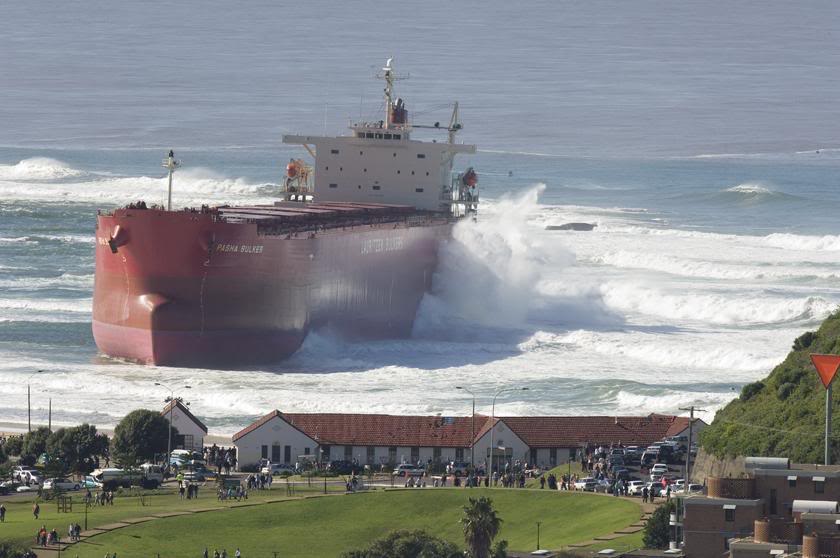
Pasha Bulka aground at Nobbys Beach Photo by Murray McKean

Pasha Bulka aground at Nobbys Beach
Photo by Murray McKean


We, and our characters, all exist in a public and a private life at the same time. I’m someone’s sister, wife, child, mother, friend, neighbour. I’m that person who loves the thrill of body surfing large breakers, and gets asthma when I eat garlic.

And I am also part of history. I was lashed by the storm on Nobbys Headland when the container ship, Pasha Bulka, crashed onto the beach. I sat among a sea of uniformed school children on the playground concrete and watched Neil Armstrong walk on the moon. I voted in the election that gave Australia her first elected woman Prime Minister.

The individual is history writ small. History is the individual writ large.

Understanding what historical events shaped you, and how they formed the way you perceive the world, is important to creating strong writing. Like you, your characters will have encountered historical events and endured personal experiences which shaped the way they view the world.

Ages ago I read a piece which placed the author’s horrendous divorce at the same time as the wedding between Prince Charles and Lady Diana. The intersection and resonance between this clash of public and private resulted in a powerful and deeply ironic piece of writing.

Another fine example is in Robert Fulgham’s ‘All I Really Need to Know I Learned at Kindergarten.’ He juxtaposes the most unlikely notions of laundering the clothes and redeeming mankind in a humorous and thought-provoking essay.

So next time your characters are faced with a personal crisis, take the time to consider the national or global events that may have shaped them and the way they perceive their world. Could any of those events resonate with your characters’ lives and could they be used as a framework to enrich your story?

Posted in Uncategorized, Writing | Tagged , , , , | 22 Comments

January Challenge

Early in my writing life I became friends with a woman who created perfect prose. Her language, its rhythms and word choices, sang exquisitely. Her stories evoked such overwhelming emotion in me that I often felt like crying from the beauty of it. And she did it instinctively and almost effortlessly.

My friend has only written 3 stories in 15 years, each one award-winning.

She’s been on my mind as I’ve thought about my New Year’s Writing Resolutions. I must have been thinking about her so much I’ve started channelling her. For the first 16 days of 2014 I’ve written nothing.

No, that’s not true. I’ve written teaching notes and lesson plans for my Creative Writing Classes. I’ve written emails to friends and students. I’ve edited other writers’ work. I’ve started loading stories into Pressbooks for an ebook anthology for a Writing Workshop. All activities in and around writing. But I haven’t yet written one word of writing for myself.

Habits take 21 days to consolidate so I’m well on the way to following in my friend’s footsteps.

So here’s my New Year challenge to all of us.

For the next 21 days let’s get up half an hour earlier and write. On the mornings we’re home I know once we start we won’t stop. But this challenge isn’t really about the writing.

It’s all about establishing discipline. Something my brilliant friend lacked – and that’s a tragedy.

Will you join me?

“Exercising is a good analogy for writing. If you’re used to not exercising you want to avoid it forever. If you’re used to it, it feels uncomfortable and strange not to.” Jennifer Egan

Posted in Writing | Tagged , , , | 23 Comments

A Writer’s Glimpse of a Man Booker Winner

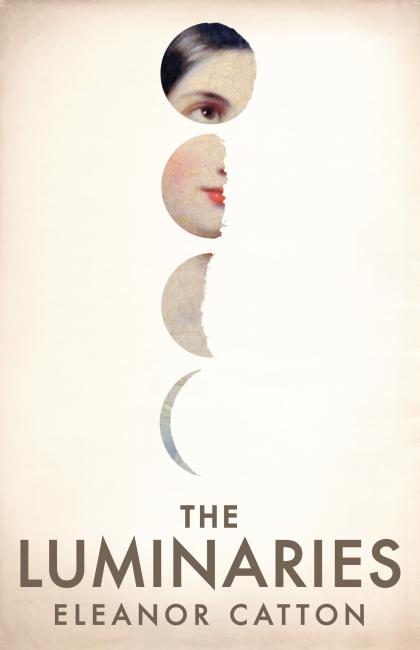
73.Eleanor Catton-The Luminaries
I’ve started reading Eleanor Catton’s The Luminaries, winner of The 2013 Man-Booker Prize, and I’m in awe.

It’s fiercely intelligent. The language consistently reflects the mid-19th century, and rolls along in an improbable mix of luxuriously precise prose. Sometimes I stop and reread sections aloud to savour the sound and the rhythm of the words on my tongue.

The plot, a murder/mystery of sorts, is complex and richly textured. It will have you working overtime to process the information you discover, and then work out how this shades the characters’ actions and motivations. The challenge is as exhilarating as a cryptic crossword and as exciting as connecting disparate pieces and finding meanings.

Catton’s understanding and insight into human character are astronomical. In one ironic sentence she captures the uneasiness of a character who is aware his actions had been morally dubious. “ He was getting worked up; evidently this was a subject on which he had desired to defend himself for some time.

Much of the beauty in The Luminaries comes from her depictions of place. In the following excerpt the settlement of Kaniere opens up before the reader’s eyes at the same time it does for the characters. Catton starts with a broad sweep of the landscape, positioning ‘the canvas settlement’ in the ‘lattice of gullies and streams’ between the Alps and the sea. Just the one word, ‘canvas ‘ expands to take in the transient, makeshift and rudimentary nature of the settlement.

The canvas settlement of Kaniere was stationed as a midpoint between Hokitika and the inland claims. The land around the settlement was fairly flat, rutted by a veritable lattice of gullies and streams, all of them bearing stones and gravel down from the Alps, towards the sea; the sound of moving water was ever-present here, as a distant roar, a click, a rush, a patter. As one early surveyor had put it, on the Coast, wherever there was water, there was gold – and there was water all about, water dripping from the ferns, water beading on the branches, water making fat the mosses that hung from the trees, water filling one’s footsteps, welling up.” (p208)

From the broader picture the paragraph narrows to one element – water, used synonymously here with gold. Water bears down from the Alps on its way to the sea in a variety of sonorous movements, as does the gold the characters covet.

The details Catton uses are specific, concrete and meaningful. We are placed in a landscape of ferns, trees, moss, and the ubiquitous water. She uses words such as ‘dripping‘ and ‘making fat‘, bringing to mind people dripping in money, and getting fat on the proceeds. The ‘water beading on the branches‘ suggests something sparkling. The images are strong of a boot making an indent in the sodden earth, and watching as the water fills the footprint, welling up inside it. The scene is submersed in water, and consequently in gold.

Each micro detail adds reality and dependability to the scene, and at the same time, hints at the layers of meanings in the text. Rarely do you find a work of fiction that is so beautifully rendered in every aspect of writing craft that it deserves an emerging writers’ intense analysis and study. This novel is one of them.

Posted in Books | Tagged , , , , , , , | 11 Comments

Thoughts on an ending

A weak ending can ruin a whole story. But strangely, the problem usually doesn’t lie in the final lines. Yet that’s where we spend endless time trying to “fix” it, by revising, rewriting, rereading that last paragraph.

When the ending is causing a problem, it could be there’s something wrong with the way you got there. It’s worth going back to work on the story rather than the ending.

There are a variety of reasons why endings falter.

– The character may have gained a sense of realisation, or achieved his or her desire, too early and everything after this point seems anticlimactic.

– If your story just stops, the plot could be forced and inorganic, or fail to track the development of a character or society.

– Nothing stops a story short more than a closed ending. The goal is accomplished, the character gains self-revelation, and there’s a new equilibrium where everything is hunky-dory. These stories don’t reflect life, and suffer because there’s no sense they go on living in the world after the story has been told.

It’s important to see a story as a structure in time. The characters we’re writing about should exist outside the story we’re telling. A story is just a moment when something important happens to someone within their lifetime. They should have lived before they reached this point and they will keep on living and developing after the story is finished.

Open endings tend to broaden the scope of the writing and expand the possibility and complexity of its meaning. Stories with open endings often finish on a turning point, and as a result open up a whole world of potential directions. Marion Halligan’s Spidercup, one of my favourite novels, ends before the main character makes a choice about how she will live in the future.

If you’re having trouble discovering the right ending try these things:

1. Weave a more complex tapestry of character, plot, theme, symbol, scene and dialogue, elements that provide texture and richness to the story. This will usually result in an organically grown ending.

2. Reconsider plot. End your story with a reveal that shatters the equilibrium and sends the reader back to rethink the characters and their actions. A classic example is ‘The Alexandria Quartet’ by Lawrence Durrell. Four narrators tell of the same events, but each reveals new aspects, and the reader’s understanding of these events changes dramatically with each telling.

3. Don’t show what the character will do when faced with a moral choice, or make the moral argument ambiguous. Let the reader question what makes a choice morally right. This will hopefully lead them to explore that choice in their own lives. Chekov was the master of this.

4. Images are more powerful than words. End on an image and an action that symbolises the outcome for your character. Let the image show a turning point that will point towards future possibilities and reveal hidden layers in your character. Nic Low’s story Rush which won the Overland Victoria University short story prize in 2013 does this to perfection.

When the rest of the story is working well the ending should suggest itself, and floor you with the rightness and inevitability of it. Jack Hodgins’ words deserve to end this post.“I suspect the best endings do not have to be invented at all, but recognised.”

Posted in Short stories | Tagged , , , , , | 16 Comments

Friday Fictioneers – 20th December

Copyright - Jean L Hays

Copyright – Jean L Hays


Every Friday writers from around the world contribute 100 word stories prompted by a photograph supplied by Rochelle Wisoff-Fields to Friday Fictioneers. Everyone is welcome to contribute and we love comments on our stories.

Ripples

That afternoon the cherry trees outside her dorm in Kyoto were inundated with ripening buds, and Keiko nearly burst with excitement. In a few weeks, when the blossoms frilled from their pods like cowry shell creatures, she could go home.

Her mother, father, sisters, cousins, aunts, would flood Sendai station to meet her train. There’d be a welcome banquet in their house in the fishing village: hot smoked fish, octopus balls, red paste cakes. She’d sleep in her pink time-warped bedroom.

Suddenly the air surged and buckled. The new buds, the cherry trees, her whole world, rippled as if she were looking through water.

Posted in Short stories | Tagged , , , , | 39 Comments

Author Interviews – Zed Book Club

Merry Christmas to all writers and readers. Here’s my Christmas gift to you: quality interviews with authors hosted by Zed Book Club on Radio 4ZZZ in Australia.

I’m always scouring the internet for podcasts to listen to in the car or at night before I go to sleep, and came across Sky Kirkham interviewing one of my favourite authors of weird fiction, China Mieville.

I searched to see who else The Book Club had interviewed and found 100 interviews of high-caliber authors such as Margaret Atwood, David Astle, Alex Miller, Christos Tsiolkas, Chris Womersley, Colm Toibin, Junot Diaz, Graeme Simsion. The questions are interesting, intelligent, and often lead in unusual directions. What’s more the podcasts are free. Find the selection of 100 author interviews here.

Every week Sky, Grace, Amy and Samuel have an hour where they look at what’s new and exciting in the literary world. This include panel discussions, author interviews, and argument over the merits and flaws of a favourite book. They promise whatever they present will be “interesting and passionate.”

On the first Thursday of every month they discuss the book of the month, so you can read it and then listen in.

Book reviews by the hosts and others can be found on their book review page.

All the details are on their website .

MERRY CHRISTMAS AND HAPPY LISTENING.

Posted in Books, Uncategorized | Tagged , , , | Leave a comment

Congratulations!!!

Writers can become disheartened, but it’s the ones who have the persistence to keep working through uncertainty, through the lack of recognition and acknowledgement, who have the highest chance of succeeding.

Over the last month I’ve witnessed a rush of good writers who have seen their hard work pay off. Their achievements are an exciting tribute to their persistence, skill and creative imagination. Hearty congratulations and three cheers for the following writers.

grieve Maree Gallop won second prize in the Hunter Writers’ Centre Grief Competition for her short story, The Clothes Heist. Her beautiful story is included in the anthology of short-listed stories titled Grieve, which is published as an ebook on Amazon. If Maree’s story and the moving piece which was read at the launch last Thursday is any indication of the quality of the publication, it is one not to be missed. Selling at $0.99 it’s a steal.

Dee Taylor (centre)

Dee Taylor (centre)


Dee Taylor won third prize in The Port Stephens Examiner Literary Awards last month and won the Tanilba House Award for her heart-warming memoir, Time Travellers.
Phil Murray was awarded two Highly Commendeds in the same competition.
Kath Cridland was also recognised with a commended.

It takes courage to send out writing to competitions and publishers, and it can be shattering to continually get back rejection slips. What counts is getting back up, brushing off the dust, working hard to improve your skills and persevering. But, above all, immerse yourself in the pleasure of writing.

Who knows, next time it might be your turn.

Posted in Short stories, Uncategorized | Tagged , , , , , , | 6 Comments