Writers’ Secret Weapon: vulnerability

vulernability

I once heard Peter Carey, two times winner of the Man Booker, tell Phillip Adams on ABC’s Late Night Live that the week before a new book comes out he can find himself curled on the floor in a foetal position, terrified.

Soon after, I read another astounding comment, this time from Helen Garner in Making Stories by Kate Grenville & Sue Woolfe:

Some days I look at what I’m doing and I think: This is pathetic. How can I have thought this was any good? That’s when the bottom drops out of everything. Some days it’s so awful I have to put my pen down and lie on my bed, or go to the movies. I feel like a phoney; an appalling phoney and someone’s going to find me out. I’m going to be exposed. . . that’s my fear. They’ll say: who wrote this? She calls this a book?

What astounded me about these comments from The Luminaries wasn’t just that THEY felt like this, but that they admitted to feeling like this.

So when I heard Brene Brown address the questions of vulnerability and shame in her Ted Talks it felt as if she were speaking directly to the writer in me.

Brene Brown

Brene Brown

Shame is what Peter Carey and Helen Garner were feeling.

Shame is internal. It’s that feeling we have that we’re not worthy. Is there something about me that if other people see or discover it they’ll know I’m not good enough, or clever enough, or imaginative enough, or creative enough, and all those other things of which we don’t have ‘enough?’

And when we get rejections or bad reviews it just confirms our fear that others think we’re unworthy, too. It doesn’t seem to matter that we know publishing decisions can be made on economic grounds – eg. our story is good enough but it doesn’t fit in their line-up, it’s harder to sell an unknown author, Virginia Woolf sent in a manuscript on a similar subject yesterday, the publisher doesn’t think novels with boats in them sell (true story!), etc.

Brene Brown says shame is the fear that we will be disconnected from others. She says we’re neurologically wired to connect to each other. It’s why we’re here.

When I thought about this I realised how fundamental it is to me that I connect to my readers through my writing. My writing is my way of sharing something that is important to me. Usually it’s about the human condition because people fascinate me. It might be some funny thing I’d noticed, a destructive trait, an inspiring deed, life’s ironies, a deep insight into why we act, believe, think as we do. I’m most proud of my stories which have touched other people. These are the stories, I realise now, which formed a stronger connection between the reader and me.

Sometimes I write purely to connect to myself. It’s how I learn what I want to say or what I think and feel. I have boxes of journals full of my attempts to make sense of me, the world I live in, the things that fascinate me, and the people in my life. Don’t worry, You-Know-Who-You-Are, I’ll burn the journals before I go. My creative writing almost always comes out of the ‘journalling’ process.
journals

And aren’t blogs an attempt to connect with other people all over the world? We make ‘friends’ in online communities. Whenever I can I participate in Friday Fictioneers, a group who writes 100 word stories from a photo prompt. We give each other the encouragement and constructive criticism writing needs. But by putting these stories online we are exposing ourselves and our writing to people we may never have met, or are even likely to. Yet the act of making ourselves vulnerable to them builds a strong sense of ‘belonging’ in these communities.

I’ve noticed that the bloggers who are the most open and honest, who write from the heart, who don’t seem frightened to show their vulnerability, attract the most views and seem more connected to others. Dawn Quyle Landau’s blog Tales of the Motherland is a privilege to read for her heart-warming insights and her refusal to shirk the hard questions. Read the heart-felt post My Funny Valentine and see what I mean.

So am I right in thinking acknowledging our vulnerability in our writing will make our readers feel more connected to us? Brene Brown thinks so.

In her research she found people who are able to cope well with their feelings of shame have a strong sense of love and belonging, and more importantly, believe they are worthy of love and belonging. It’s not that they don’t feel shame, but they don’t feel it as an excruciating vulnerability that can be debilitating. She also found that the thing that keeps us disconnected is our fear we aren’t worthy of connection.

Brown looked at the people who were most successful at connecting to others and discovered they shared these qualities:

– The Courage to tell the story of who they were with their whole heart.

– The Compassion to be kind to themselves, and others.

– To allow others to see their vulnerability.

– The willingness to do something that carries no guarantees. To invest in things that may not work out.

She concluded that while vulnerability is the core of shame and fear and struggle for worthiness, it is also the birthplace of joy, creativity, love, and belonging.

How can we apply her findings to our writing?

We can encourage the willingness to invest in writing that has no guarantees. Even on those days when it all seems pointless and the writing is abominable. Because if we don’t keep going, nothing better can come.

We can show more kindness and compassion to the writer within us who can feel so vulnerable at times he wants to curl up in a foetal position, or lie on her bed.

From our own reading we know we relate most to writing that is honest and straight from the heart. It takes courage to write like that, to let our vulnerability be seen. But if the result are authenticity and a deeper connection to our readers, and ultimately to ourselves, then what are we waiting for?

Who knows, we might even get closer to believing we are enough.

Watch Brene Brown’s Ted Talks.

The Power of Vulnerability
Listening to Shame

Posted in Writing | Tagged , , , , , | 31 Comments

Friday Fictioneers – 6 June

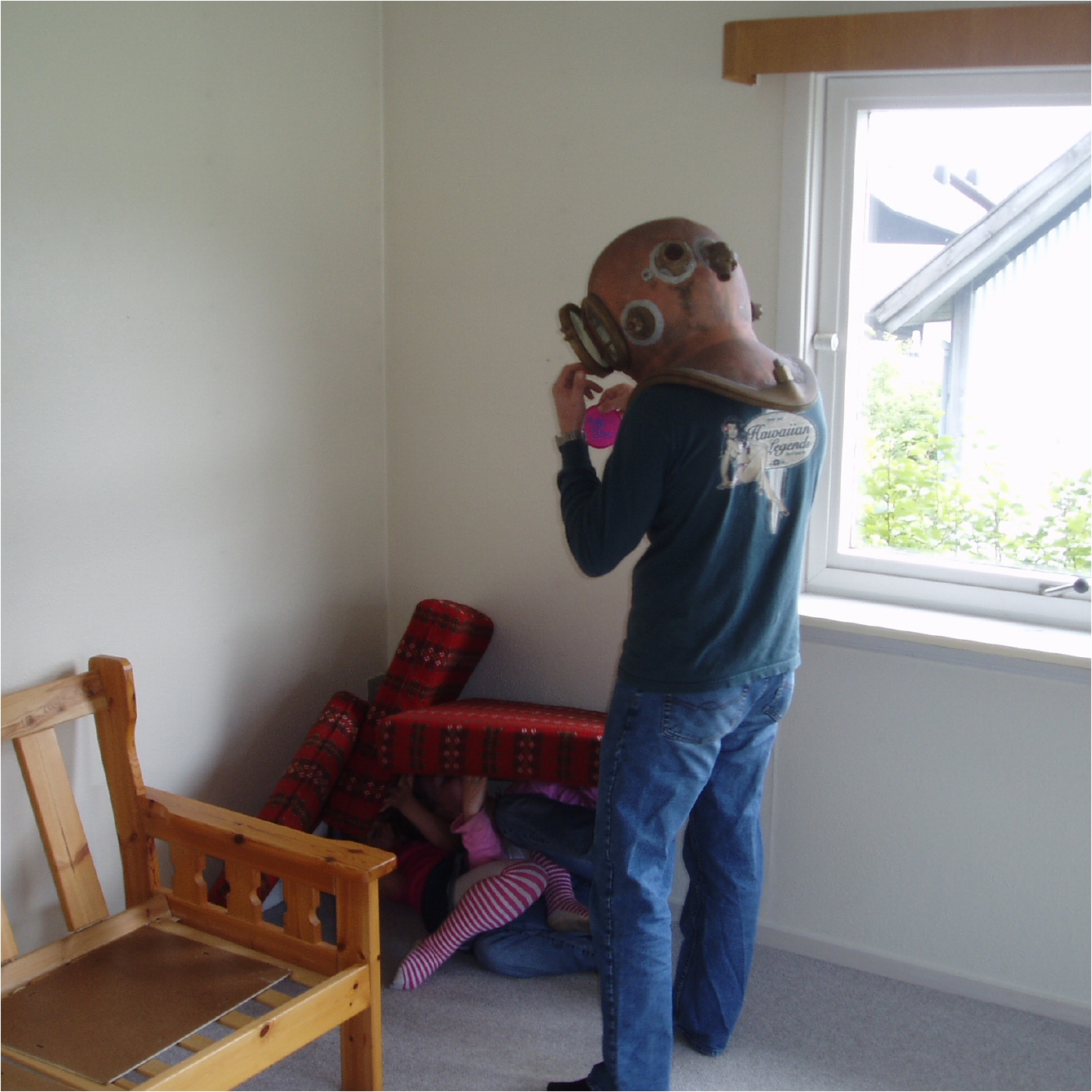
Copyright – Douglas M. MacIlroy

Copyright – Douglas M. MacIlroy


Every Friday writers from around the world contribute 100 word stories prompted by a photograph supplied by Rochelle Wisoff-Fields to Friday Fictioneers. I love constructive comments on my stories.

My inspiration this week came from a Japanese 10th century folk tale, The Tale of the Bamboo Cutter.

The Elixir of Life

Humans think the Elixir of Life will solve all their problems.

Eleven centuries ago I left a drop of the elixir for the Emperor when I left earth. He ordered his soldiers to burn it on the peak of Mt Fuji; he didn’t want to live forever without me. For eleven centuries foolhardy people have climbed the mountain in search of it.

No one ever considers that day-to-day tedium lasts forever, too. How many slippers do you think I’ve had to replace in eleven centuries. And what good is the Elixir of Life in a power blackout? Bet they don’t think of that.

Posted in Uncategorized | Tagged , , , | 44 Comments

Stories at The Mosh Pit a huge success!

Jessie Ansons writes about a great afternoon of readings!

Jessie Ansons's avatarJessie Ansons

At the quirkiest cafe in downtown Cardiff, a group of writers gathered to read their work…

On Saturday afternoon I was lucky enough to MC a brilliant writers event in Newcastle, NSW. The day was informal yet structured, serious yet fun. The Mosh Pit Record Shop and Coffee Bar was the venue and about 30 people squeezed into the bright and eclectic space.

Marg and wall of records Margaret Jackson opens the event; records of all kind cover the walls

Most of the writers were from our writing group, and there were two guest writers and one young writer. Margaret Jackson, the founding member of our writing group, opened the event.

View original post 534 more words

Posted in Uncategorized | 2 Comments

Live Reading

Doing anything Saturday? Why not come along for coffee and entertaining readings by some of our best local authors. It’s free! See you there!
Mosh Pit live reading flyer 31 May_TRITON A4 (BLOGS FACEBOOK ETC)

Posted in Reading | Tagged , , , | 5 Comments

David Malouf at Sydney Writers’ Festival

Sydney Theatre. 11.30 am. 22 May, 2014

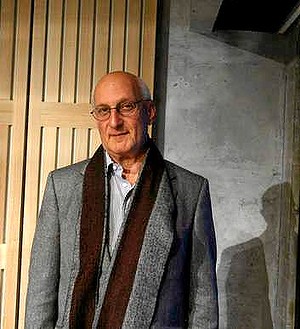
David Malouf

David Malouf

The auditorium lights faded.

Enter stage right, David Malouf. Australian Book Review’s first laureate. Multiple literary award winner, including the Commonwealth Writers’ Prize. Man Booker short-lister.

Enter Tegan Bennett Daylight. Interviewer. One of SMH ‘Best Young Australian Novelists.’

David Malouf was dapper. Smart grey blazer and cream trousers. He was so polished even his bald pate glowed. He spoke perfectly formed sentences with a beautifully modulated and warm voice. At 80 years old, he looked 50.

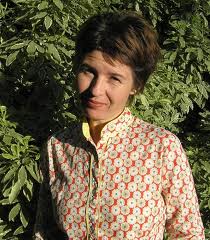
Tegan Bennett Daylight was natural. Hair windswept. Red and white swirly sun dress and flat birkenstock-style sandals to match. An Australian accent with no pretension. She looked 18.

If you wondered how this young slip of a thing came to be interviewing the Grand Master of Australian Literature you didn’t wonder for long.

Tegan Bennett Daylight

Tegan Bennett Daylight

Tegan Bennett Daylight asked those questions you would like to ask yourself, and questions which elicited thought-provoking ideas. Even questions you didn’t know you wanted answered. Even questions you wouldn’t be game to ask. A perfect interviewer, in other words.

Were you in love when you wrote that book? she asked soon into the session. The house stopped breathing. Malouf rarely talks about his personal life. He hesitated briefly. Yes, he said, and steered the conversation smoothly into a discussion of his book.

Malouf shared his writing practice.
– He writes daily, otherwise it’s too hard to keep starting up again.
– When he writes he can often reach a heightened state, where he loses all sense of time and place, so immersed is he in his created world.
– His characters take him on their journey, sometimes where he doesn’t want to go. Story is about characters being tested and having to find a new way of being in the world.

The writing self, he said, is selfish. It will find its own process, its own agenda and logic and way of putting things together. The work, poem or novel, knows something the author doesn’t. You have to trust it.

Safety by Tegan Bennett Daylight

Safety
by Tegan Bennett Daylight

What fascinated me about his process was this statement, “Form doesn’t matter.” Alex Miller said a similar thing yesterday. For Malouf a novel is worked an inch at a time and creates its own arc magically. I suspect he means that great works grow organically.

Yet almost all writing students worry constantly about form and structure. They have the ideas or the plot, but they are anxious about how to put it all together. Very rarely are they satisfied with ‘write it and see what happens.’ It takes great courage to trust that the form your work will take magically resolves itself, especially in creative arts where doubt and chaos play such an integral and crucial part.

I believe the best way to learn to write is to write , and read attentively. Miller and Malouf have the advantage of coming out of their apprenticeships a long time ago. That’s not to suggest they aren’t still discovering new ways to create, far from it. Miller has written 10 novels. Malouf has 9, as well as plays, poetry, non-fiction, libretti. Their reading lives are extensive. But the experience they have to draw on is colossal, and their trust hard won. When they were writing their first novel were they confident the structure would invent itself? I wanted to hear about the process that took Malouf and Miller to the point where they could say with such conviction that “form doesn’t matter?”

William Shakespeare

William Shakespeare


Talking of rich reading lives, David Malouf’s is astounding. Could he really have read the complete set of Shakespeare’s plays at the age of 10 when his father presented them to him? How much did he understand? As a 12 year old he was reading novels like Wuthering Heights, Persuasion, Vanity Fair because they showed him the most extraordinary things about a world he couldn’t wait to grow up to inhabit. I’m ashamed to admit that at 10 I was reading Charlotte’s Web and anything with horses in it.

At one point in the session Bennett Daylight had to ask the audience to amuse themselves while she took a moment to contemplate the profound idea that Malouf had raised. The audience laughed, but it was the laugh of consolidation. Hadn’t we all felt like that at least once during the hour?

A First Place Book of essays

A First Place
Book of essays

To celebrate his 80th year Malouf has brought out a book of essays titled A First Place. He said you never leave or grow out of the first place you come to know. Writers form from the age of 3. This early world remains exotic because you see it through the eyes of a child. It is here you learned or became aware of the mystery and unpredictability of the world. Questioning and eavesdropping. You exist in a heightened state because everything is new and exciting. At the heart of his essays is the idea of home, what and where it is.

Graciously, just before they left the stage, Tegan Bennett Daylight thanked David Malouf for his generosity, not just for his open willingness to share himself and his ideas with the audience, but for his generosity to her personally as his interviewer.

It’s Thinking Season flashed up on every screen during the Sydney Writers’ Festival. This conversation epitomised it.

Definitely look out for this session on podcast.

Posted in Books | Tagged , , , , , , , | 15 Comments

Alex Miller at the SYDNEY WRITERS’ FESTIVAL

Hornsby Library, 21st May 2014

Alex Miller

Alex Miller

You would expect when an insightful author like Alex Miller stands up to talk to his readers he would make us think. Not only did he succeed, but more importantly, he made us feel.

First bombshell: his last novel Coal Creek, winner of the Victorian Premier’s Literary Award , would be just that, his last novel.

The grey heads gasped. Someone cried, No.

He explained that his first novel, Tivington Nott, had an innocence that he’d again captured in Coal Creek. He’d come full circle. Now was the time for a challenge, and another novel wasn’t going to give him that.

coal creek image

This turning point came when he visited a women’s prison to talk about his writing. In the group was a woman who had already served 7 years of a long sentence. She had read all his books and wanted him to talk about the sections she’d marked which related to the theme of absent mothers.

He was stunned. Was that theme in his work?

Yes, she said, and brought out all his books and showed him the passages she’d marked.

While she talked he remembered something. He was 18 months old. His mother was going to give birth to his sister and his father couldn’t take time off work to look after him. So for one week he was placed in a children’s home. Shards of memory remained of this experience. One was how the week had lasted a lifetime.

Miller didn’t say this was why the theme of absent mothers ran through his books, but it was the experience that came to mind.

This prisoner had children. Other women in the prison had children. All were daughters themselves. And every one of them was absent.

The room went silent.

Into the silence the same woman asked a question.

Did he think she could ever get over what she had lost?

Somewhere in his talk the women had transferred responsibility to him. They waited for him to answer as if it was the most crucial thing in their lives. As if he was the person who would know.

In the room in Hornsby Library tonight no one moved. We were waiting, too.

Alex Miller paused as if he was reliving that moment. Then quietly he said, ‘I told them, no, they would never get over it.’

He had said it with compassion. He acknowledged their loss with solemnity. And he honoured them with the truth.

‘But,’ he had said. He told them they could transcend it, and he told them about a friend of his who had done that, who he had written about in a novel, and who had gone on to live a good life.

prison_2763To write about the pivotal moments in his life, like the women’s prison, is the challenge Alex Miller has set for himself. To write the truth. To write the truth with the clarity of simplicity.

He quoted Berthold Brecht on his death bed, “I always thought the simplest words must do.”

If this evening’s talk gave us a taste of the new direction in which Alex Miller is headed, then I will be doing something I have never done before – pre-ordering his next book.

So here’s the heads-up: it won’t be a novel.

Posted in Books | Tagged , , , , , , | 15 Comments

Friday Fictioneers – 9th May

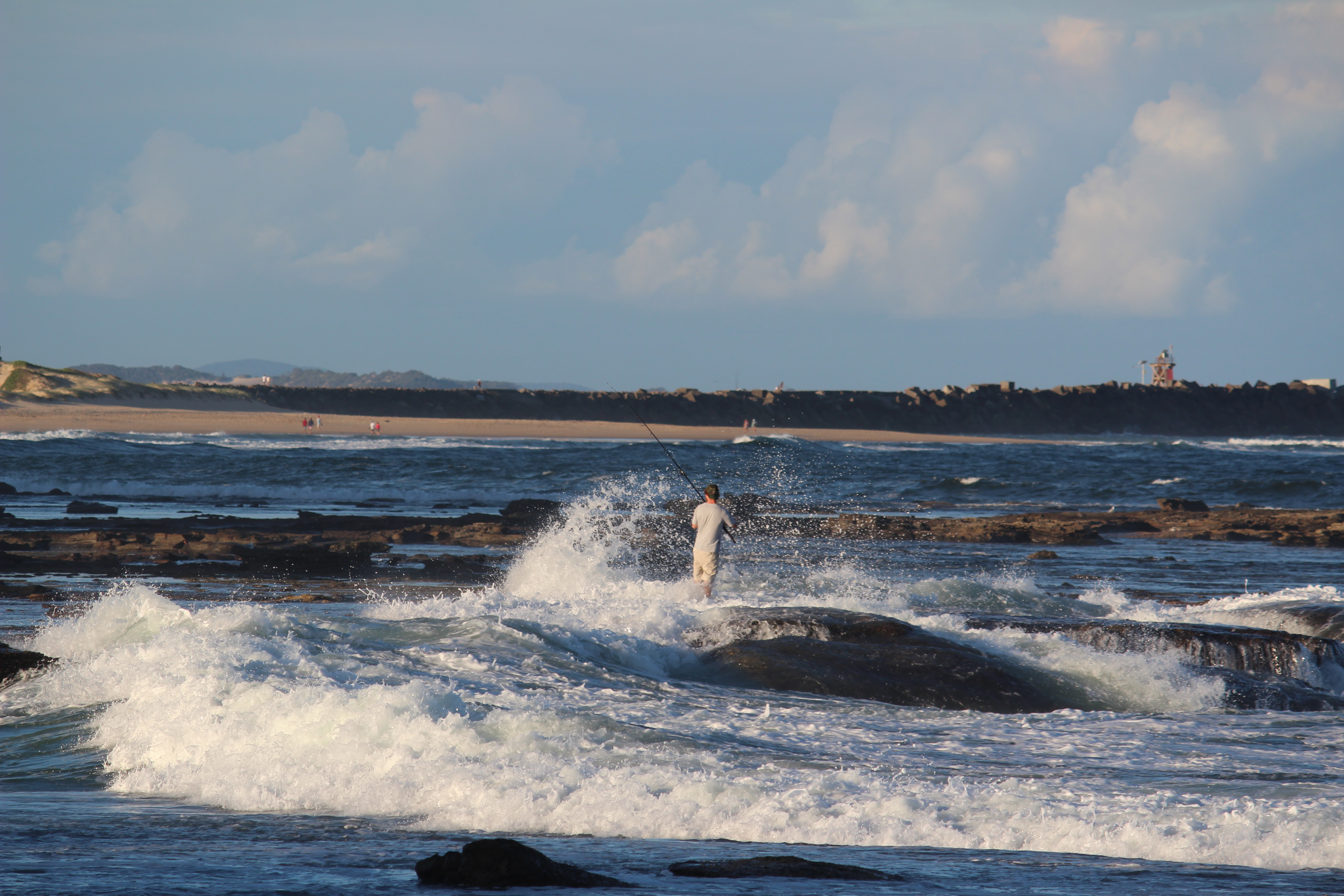
copyright - BW Beacham

copyright – BW Beacham

Aftermath

She makes herself get up at dawn to walk along the shore. No one is around then. It eases her into the unsafe world; otherwise she would hide in bed all day.

The police car usually passes her on the way back. He salutes. Her mouth laughs.

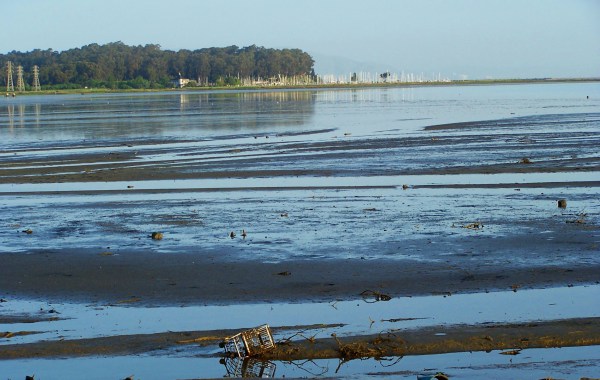
Today she risks going as far as the village. The tide tumbles and trips over garbage in the bay: broken branches, a shopping trolley upended like a beaten wife, seaweed, smashed beer bottles.

Beyond the wreckage the water is smooth, reflecting a sky rubbing sleep from its eyes, a white house and the masts of sailboats waiting like her.

Posted in Short stories | Tagged , , , | 43 Comments

Books are Bad for You

20140506-105846.jpg
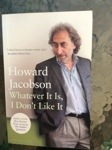
There is no way someone who lives books, reading and writing can ignore a column piece called Books are Bad for You. My hackles go up immediately and I’m ready to argue with its author, Howard Jacobson, before I’ve even read it.

Which is, of course, exactly what he wants his reader to do.

He makes the point that “Any book worth reading will have you arguing with it by the bottom of page one, …” Does that make your piece even more valuable, Mr Jacobson, because I didn’t get past the title?

“… will have you reaching for your pencil and your notebook by page two, …”

Those words bring Virginia Woolf to mind.

Confession time: If I have difficulty starting to write, and we writers are experts at finding excuses, I pick up Virginia Woolf’s A Writer’s Diary. Immediately I’m transported to Monk’s House. Strangely, not to the study at the end of the garden, but her bedroom semi-detached to the house with the single bed squashed against the bookcase in the corner. It doesn’t matter that the entries weren’t all written there.

What matters is that I’m sitting on the bed, listening to the woman in the armchair next to the window with a notebook in her lap, who is passionately, intimately and deeply analysing what she wants to write and how she wants to write it. It’s as if she’s talking to me, nutting out for herself what her writing means to her and casting out for new innovative ways to communicate it.

20140506-114153.jpg

By page two I am always crouched over my own notebook. Writing. Not necessarily about what Virginia – I can’t now call her Woolf – has said, but about what it inspired in me about my own life and work.

Jacobson continues that a book worth reading “… will have you so astonished that you must set it aside every couple of minutes to consider what you read.”

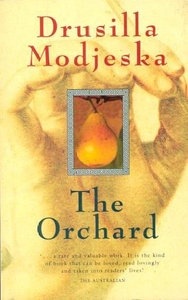
Don’t you love when this happens? And it happens too rarely. I remember a holiday on a tropical island with my husband and children. Lying on a lounger under a palm tree by the pool. Drusilla Modjeska’s The Orchard open on my lap. Before I’d finished the first page I came across a sentence so beautifully written I had to put the book down.

“Book no good?” the man in my life asked.

“I’m savouring the writing.”

20140506-151652.jpg

A few pages on and Modjeska introduced an idea so intriguing I had to put my book down to mull over it.

“Had enough already?” he asked.

I learnt very quickly of the barrier offered by the open book.

And remembering this holiday I have to agree with Jacobson that there is an expectation that a “great” book will absorb us completely. We see it as a positive thing to be carried away by its easy readability. We want books we can’t put down.

There must be thousands of books I’ve read that have been eminently readable, that took me into their world and on some superficial level moved me at the moment of reading. But I can’t remember them now. These are the books Jacobson believes are bad for us. He sees no point in this type of book at all.

The books I do remember, my favourites, are the ones that make me thoughtful, expand my world and my understanding of our world, or that are painful, and as a result, hard to read – I’m thinking of Lionel Shriver’s We Need to Talk about Kevin or Jonathon Safron Foer’s Extremely Loud and Incredibly Close. Both so confronting and agonising at times I didn’t know if I could bear to read on. But, of course, I did.

As I write this post I’m staying in a sleepy seaside village. There’s a slight nip to the breeze but the winter sun is warm and drowsy. In a moment I’m going outside onto the patio to soak in the warmth.

Howard Jacobson will not approve of the book I’m taking out there. But I’ve decided these maligned books that don’t “empower thought and sense” can still have a place in my life.

What do you think?

Posted in Books | Tagged , , , , | 10 Comments

Sentence Fragments: How to Use Them

Pedants point smugly and sneer, ‘That’s not a sentence.’ Microsoft Word screams when we use them. But many writers write in fragments and to great effect.

Good fragments aren’t made by chopping off any old sentence randomly. Fragments are short and emphatic, and suit moments that hold the dramatic and vital.

Here are some ways to use fragments effectively:

* Fragments can establish aspects of setting quickly.

Sunday. Mid-morning. Early summer.”
(Peter Goldsworthy, Three Dog Night)

* Fragments reveal character quickly.

“They think I’m dignified. Wealthy. A little mysterious.”
(Cate Kennedy, Flotsam)

* Fragments can contain and give emphasis to critical or pivotal moments.

“Sex with her had brought him to the edge of the yellow line on the platform of tube and train stations where he stood thinking about it. Paddington. South Kensington. Waterloo. Once in the Metro in Paris. Twice in Berlin. Death had been on his mind for a long time.”
(Deborah Levy, Swimming Home)

* Fragments can heighten traumatic moments.

This excerpt holds the moments between the main character’s last sighting of her lover and news of the tragic accident.

“I had to lift the headphones away from her ears to ask again, and I remember the glossy slip of her hair between my fingers, her nod, her tucking money into her jeans and going out on that foolish chore. Black sesame seeds, as if the world would stop if I didn’t have them. And the sun in the kitchen, listening to PBS, and the time lengthening and lengthening. Sharpening into fear. And the phone ringing.”
(Cate Kennedy, What Thou and I Did, Till We Loved)

* Fragments can be used to build sensory details.

“And here is her father’s razor, one of his seven cut-throats, one for every day of the week they need to rest to keep their temper. Silver flash of steel. Hair-splitting sharp. Honed with rhythmical sinister swish on the leather strop on the back of the bathroom door.”
(Marion Halligan, Spidercup)

Another example.

“Madeleine Sheridan’s eyes were burning like coal. Blue coal.”
(Deborah Levy, Swimming Home)

The best way to learn the effects of sentence fragments is through studying the way other writers use them. Just remember fragments are usually short, and they should hold a critical vivid moment.

Posted in Writing | Tagged , , , | 10 Comments

Friday Fictioneers – 18th April

Every Friday writers from around the world contribute 100 word stories prompted by a photograph supplied by Rochelle Wisoff-Fields to Friday Fictioneers. I love constructive comments on my stories.

Copyright - Doug MacIlroy

Copyright – Doug MacIlroy

The Dragon

Trevor must have sped straight to the hospital after I called. Jimmy was high on ventolin, me on adrenalin.

I looked behind Trevor as he came in.

‘She’s not coming,’ he said. Relief felt like sedation.

Trevor pushed back his son’s fringe. His adam’s apple lifted and fell, lifted and fell.

Jimmy’s mask was strapped to his face. Smoke puffed from its holes as he wheezed.

‘I’m a dragon, Dad.’

Trevor’s smile twitched downwards. He cleared his throat and nodded.

We stayed in the hospital for one precious night. Watching over him. Like a family again.

Posted in Short stories | Tagged , , | 67 Comments