
Sometimes the only way to get where you want to go is to crawl @Rockefeller Centre skating rink.

Sometimes the only way to get where you want to go is to crawl @Rockefeller Centre skating rink.

New York City is in the midst of an Australian winter. Not that it would describe the unseasonable warmth that way, but for us Antipodeans that’s what it feels like. I’ve come with a suitcase of down and haven’t used it. Yet!
The city is wearing its Christmas dress. Christmas fairy lights, wreaths, pine branch runners, and rows of Christmas trees for sale along the streets so it smells like a pine forest. But it’s still so warm the leaves in Greenwich village don’t know it’s time to leave! Sorry, bad joke.
And dogs. Everywhere. The dogs have taken over since we were here last.

A King Charles Spaniel trotted into the bookstore in front of us in a Greenwich Village yesterday.
A white fluffy ball of a canine sat next to us last night at dinner in the local grill. It came in its own aqua Birken handbag.
Tonight in the hotel lounge I shared an ancient chesterfield in front of the fire with a chichuaua who was propped in the corner wrapped in a rug.
When did New York overtake Paris as the dog capital of the world?

The Newcastle Short Story Award is now open to Australian residents.
You’ve got until midnight on 31st January 2016 to polish up your best story under 2,000 words.
The shortlisted stories from the inaugural competition in 2012, including one of mine, were published in the anthology The Mercreature and other stories.
Details for entering the Award are available here.
Good luck!

Today La Closerie des Lilas in Montparnasse is a far cry from the café where Ernest Hemingway wrote the first draft of ‘The Sun Also Rises.’ I had come expecting to find something comfortably modest and inexpensive, although ‘large enough for banquets or an occasional raucous demonstration.’
But the open terrace where Hemingway wrote in warm weather, nursing a café crème, with his pencils and blue-covered French notebooks, is now an elegant glassed-in restaurant hidden behind a hedge of shrubbery. It looks expensive and exclusive.
In the 1920s La Closerie des Lilas was a few blocks away from the more lively literary cafes of La Rotonde, Le Select and Le Dome. For this reason Hemingway wrote here when he didn’t want to be disturbed. He was later to say:
People from the Dome and the Rotonde never came to the Lilas. There was no one there they knew, and no one would have stared at them if they came.
We’d been warned about exorbitantly priced drinks and meals in Paris’s famous literary and artistic cafés as they cash in on their famous past. I remember all too well my kir at Les Deux Magots, the café made famous by Jean-Paul Sartre and Simone de Beauvoir. The kir was double the price and half the strength that I could get from the Café Bonaparte on the next corner.
It’s in the nature of pilgrims to ignore all sound advice, and strike out in pursuit of the holy. We step inside La Closerie des Lilas.
The light is diffused. The bar is all mahogany panels, paintings, photographs and posters, dark wooden cafe tables and chairs along a red leather banquette. Behind the bar the shelves are mirrored and the bottles backlit. It’s hardly modest.
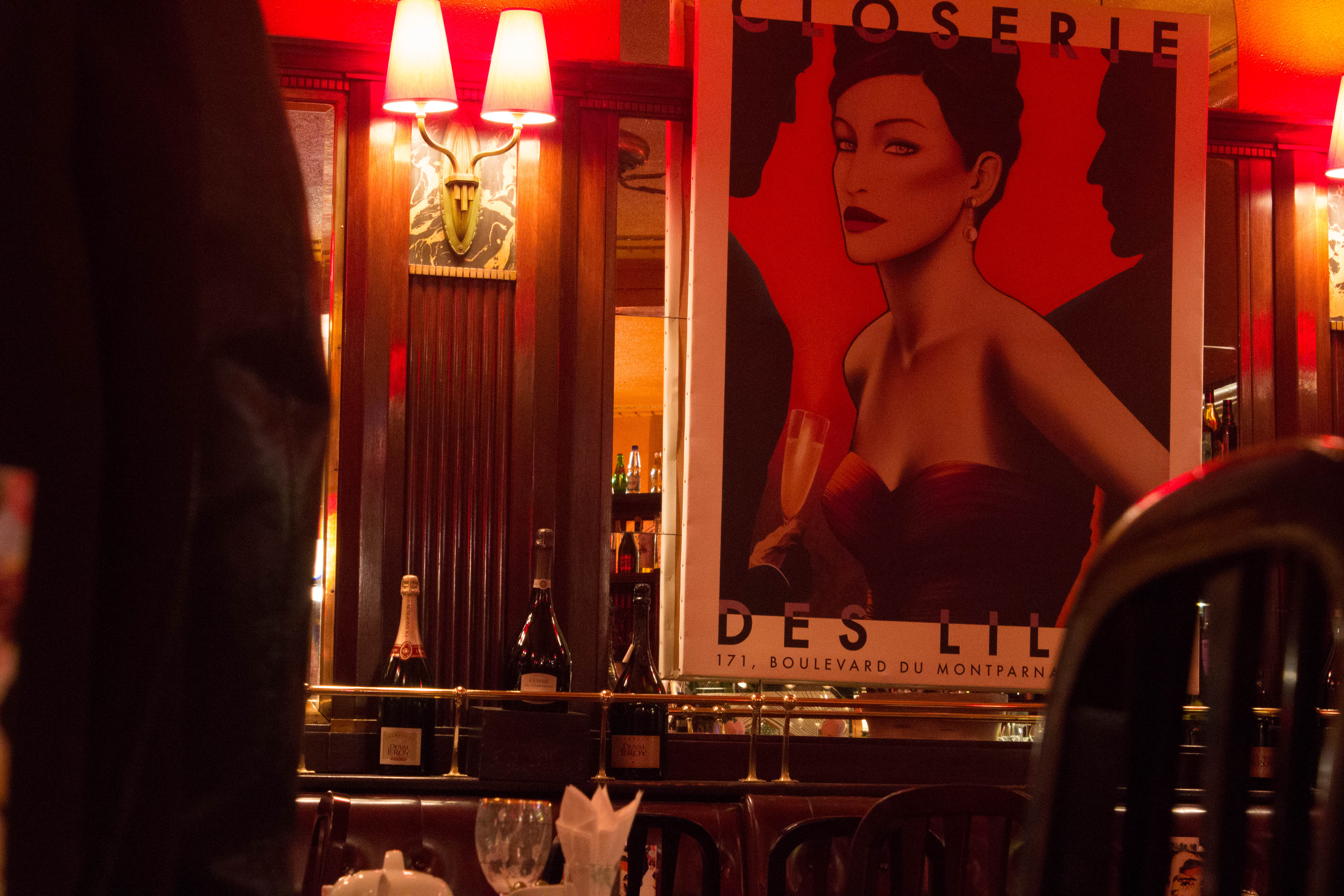
But because it’s our last day in Paris and because La Closerie de Lilas is so luxurious, and because Hemingway, whom I consider one of the best short story writers ever, wrote in this café, we lash out and buy two flutes of champagne.
As we wait I notice the brass name plaque on the table next to us. Edvard Munch. I point it out to my companion.
‘Aahhh!’ he screams with his hands against his cheeks.
Then I remember that each table in the bar carries the name of a famous client. I frantically search for the name plaque on our table. Let it be Ernest Hemingway. I find it in the opposite corner. With the low light and the gleam on the brass I can’t read it. I half stand up so I can see it properly.
Man Ray.

If there is anyone from the ‘Lost Generation’ whose work I admire as much as Ernest Hemingway, it is Man Ray. I fell in love with his photography years ago after seeing his photograph of Virginia Woolf in which he caught perfectly her mixture of vulnerability and sensitivity.

Virginia Woolf
photo by Man Ray
La Closerie des Lilas is such a charming place I’m suspicious of how much it has changed since Hemingway’s day. I’m sure the way downstairs to the toilets wouldn’t have looked like this.

Despite the plaque, our table probably never knew Man Ray, and I’m paying through the nose for the experience.
But the champagne fizzes up my nose, the oysters taste of the sea, the staff is welcoming, and my heroes once drank here just as I am.
I wouldn’t want to be anywhere else.
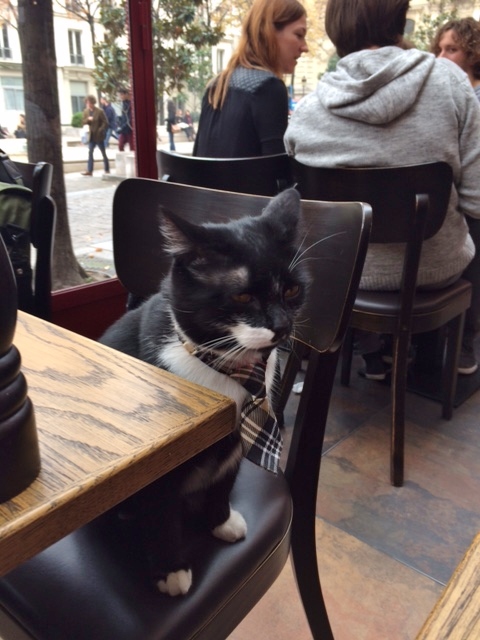
Lunchtime in a brasserie on the Place de la Sorbonne. This customer sat at the table next to us.

Our last day in Menerbes.
I was sitting out on the terrace this afternoon writing and someone in the valley lit a large fire. Australians tend to panic at the first whiff of smoke, but we’ve learned here that at this time of year the Luberon burns off its prunings. Every afternoon smoke pixelated the mountains and today it was staging a grand finale for us.
I’m not ready to leave yet.
But that’s the thing about dreams. They’re not real, and you eventually have to go back to reality. But the best thing about dreams is that they teach us something fundamental about what we want from life, and about who we are.
Living a dream is a journey.
There’s the physical journey of travelling into the world. It often involves going to unfamiliar places and doing and experiencing things we can’t or never think to do at home. This journey is what we usually think about when we think about travel.
The best travel involves a journey inside ourselves. These are often lived with greater intensity, like the excited state we inhabited as children where everything was a wonder. When the experiences move us or touch us in some deeper way, we often learn new things about ourselves, and this can change the way we view the world.
My time in Menerbes has been such a journey for me. But the questions I’ve been asking myself in the last few days have been, what have I learned, and what can I take from it back to my reality?
Firstly, these few weeks have consolidated things I knew about writing but didn’t completely trust.
1. Writing every day, regardless of what you write, improves your fluency and makes it much easier to express yourself on paper.
2. The time to dream and do nothing is crucial to writing. This is how you get under the surface of the things that interest you.
3. The loose pyjama approach takes away all the anxiety about writing and ‘producing’ something. It fosters a calm place from which to write and the results are often surprising and exciting.
What have I learned about myself?
I’ve learned that time away from the demands and commitments of home is essential for my growth as a writer. There will always be something or someone that will take precedence over my writing. The people I love will always come first.
So I’ve learned while I’ve been here that sometimes it’s necessary to take the power away from myself and live, just for a while, in a dream that is just for me. And, more importantly, that doing it is okay.
My project of blogging every day while I’ve been living my dream in Menerbes has come to an end.
Thank you very much to the people who have been following my adventures, and a special thank you to those who have commented, whether on the blog or privately. You have inspired me to keep writing.
I’ll be back next week from Paris! Hope you’ll join me there!

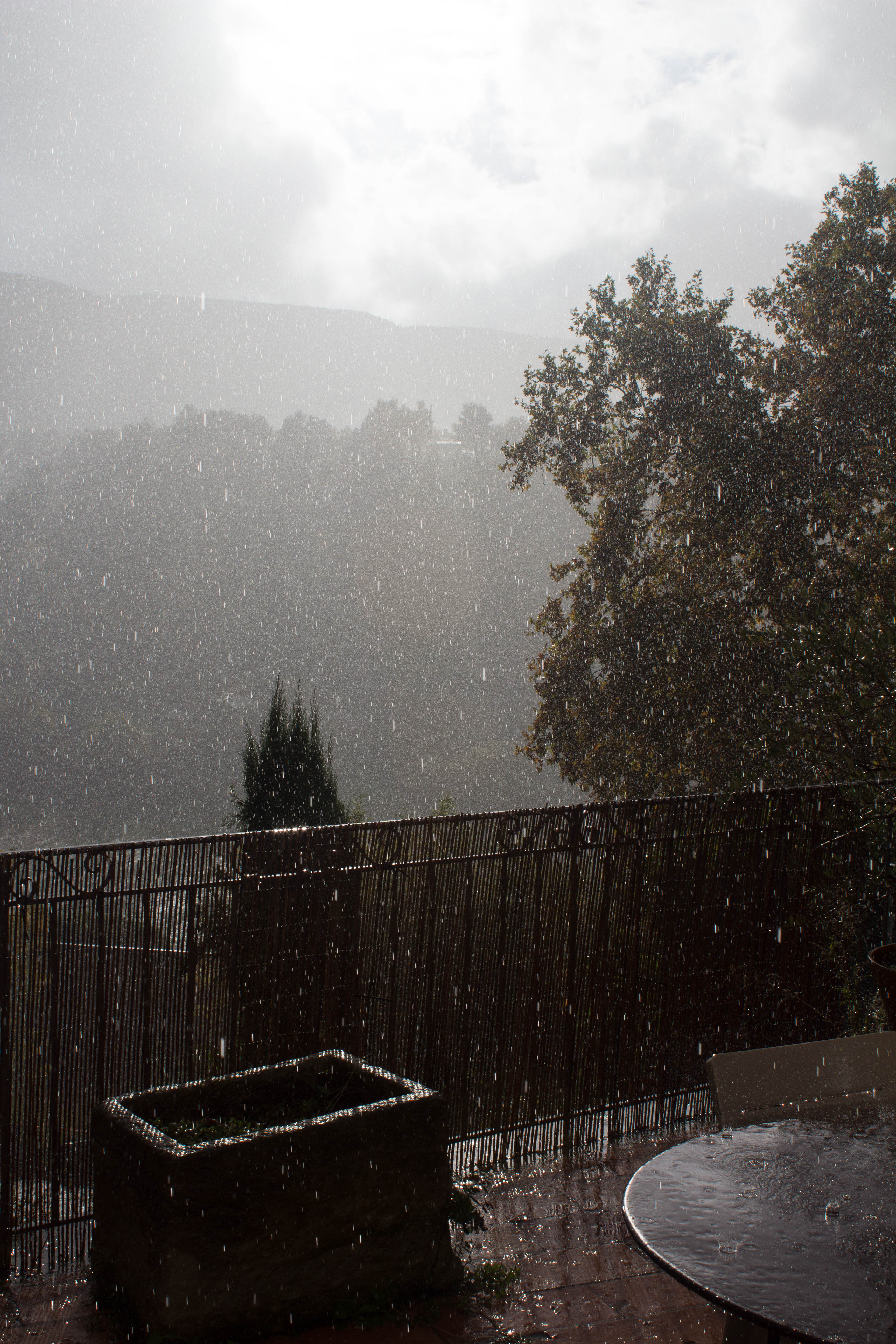
If you’re living a dream, is it supposed to storm? With no lightning, just thunder that goes on for so long you wonder if Thor’s record got stuck? And rain clouds you’ve been keeping an eye on sneak down off the Luberon Mountains when you’re not looking and cause a deluge.
And then bang! There’s the forked lightning with so many amps it lights up the day sky and then the thunder gets really nasty and shakes the wine glasses in your 18th century solid stone house.
Nothing can be done but to stay home and write. It’s raining on my desk on the terrace and the shadow of the olive tree is taking up all the space.
So I put on my loose pyjamas – I’m grateful for the reminder to get back into them, Sue – and light the fire.
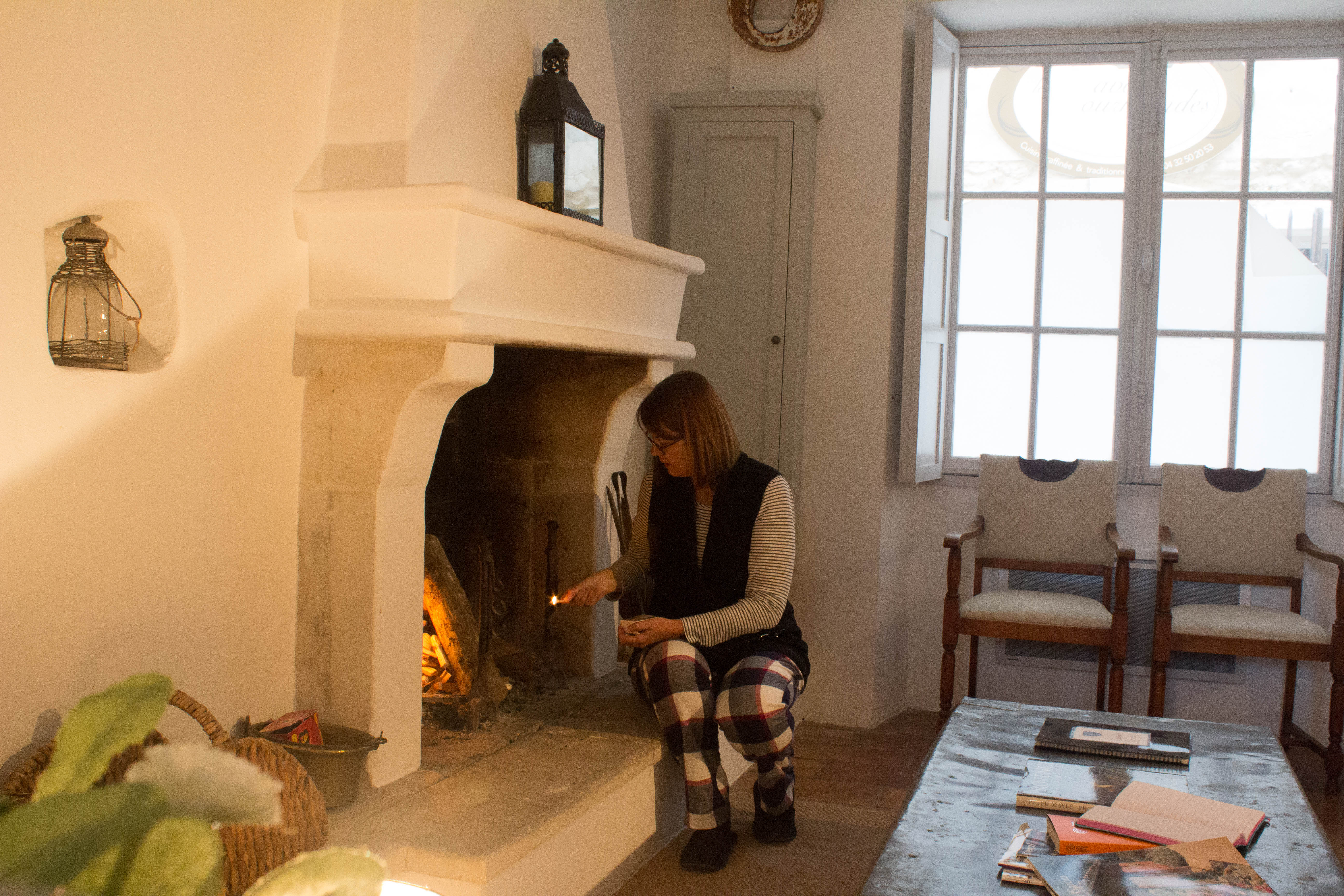
That’s where you would have found me this morning. Writing longhand in my notebook in front of the fire about whatever comes up. Collecting the bed of detail I may or may not need for my novel. Following any thought that wanders by. I have the time here to write and dream. There’s no pressure to ‘produce’ anything. I work by writer James Baldwin’s quote,
One writes out of only one thing – one’s own experience. Everything depends on how relentlessly one forces from this experience the last drop, sweet or bitter, it can possibly give.
Today in the late morning something changed. For the first time I wanted to go to the computer and write a scene that has been hanging around in my pages, solidifying for a week. The urge was as strong as the need for a birthing mother to push.
So I went to the computer and wrote. Another scene demanded to be written so I wrote that, too. There’s a joy to writing this way I haven’t experienced for a long time. It comes from abandoning yourself to your writing, listening to and following your instinct.
If there’s one thing I will take away from this time in Menerbes, it’s this.
How will the dream fit in my real day-to-day life? Ah, there’s a challenge!

The morning started with an overcast sky and clear light. There was no mist in the Luberon and the overexposured sky was bought down a stop or two to grey. Daylight saving has ended. The sun and I now got up at a reasonable hour.
Although rain threatened we decided to walk the fire trails beneath the mountains. When Peter Mayle wrote A Year in Provence a fire trail went from his house into Menerbes. Just saying.
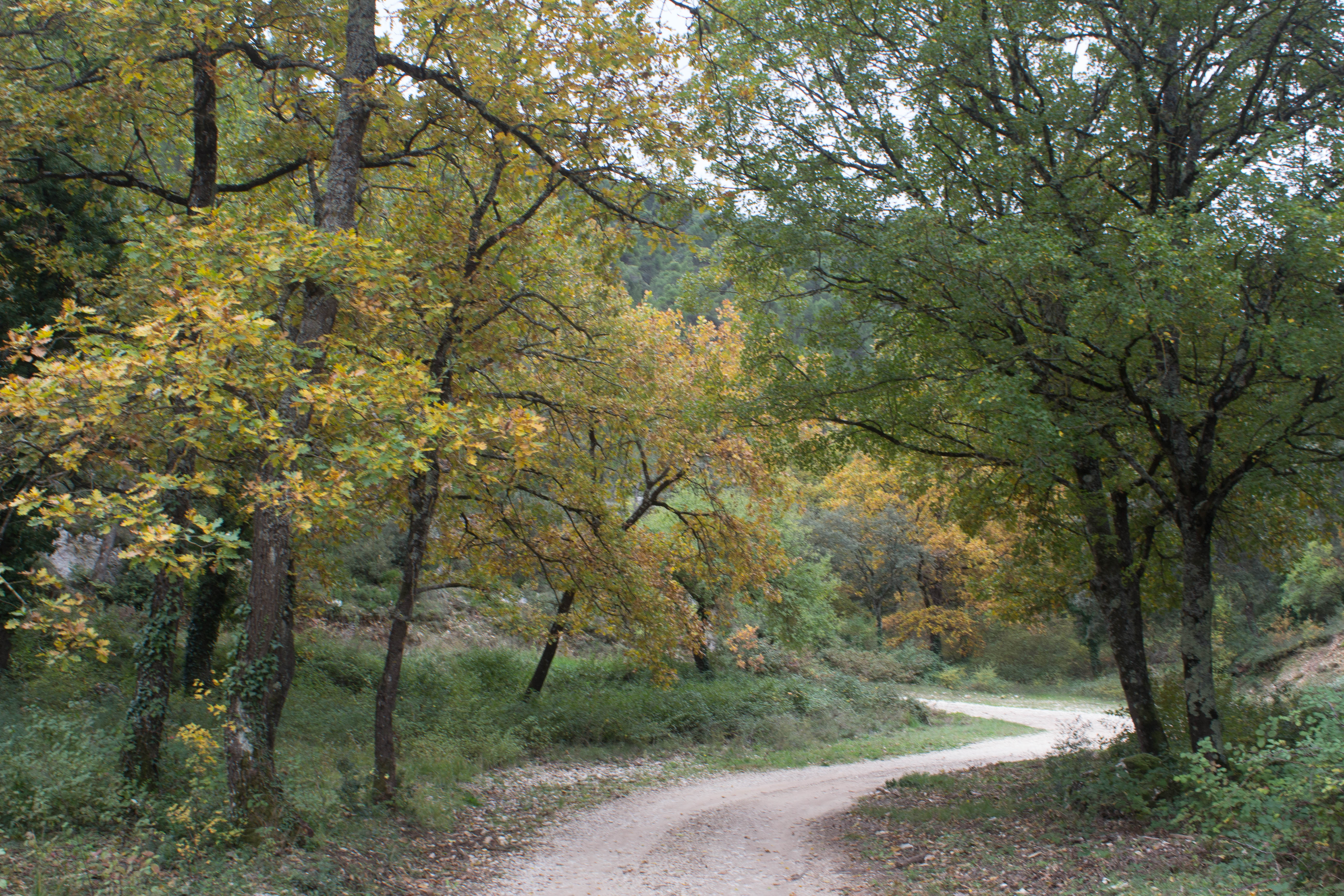
The road wound through narrow passageways between high banks of dry stone walls keeping back the hills, and the trees covered in vines made arches over our heads. Most leaves had turned russet, coral and yellow in the two and a half weeks since we arrived. Today the wind gusts sent the trees on the ridges into a frenzy. It sounded like the rush of a waterfall. Leaves rained on us.

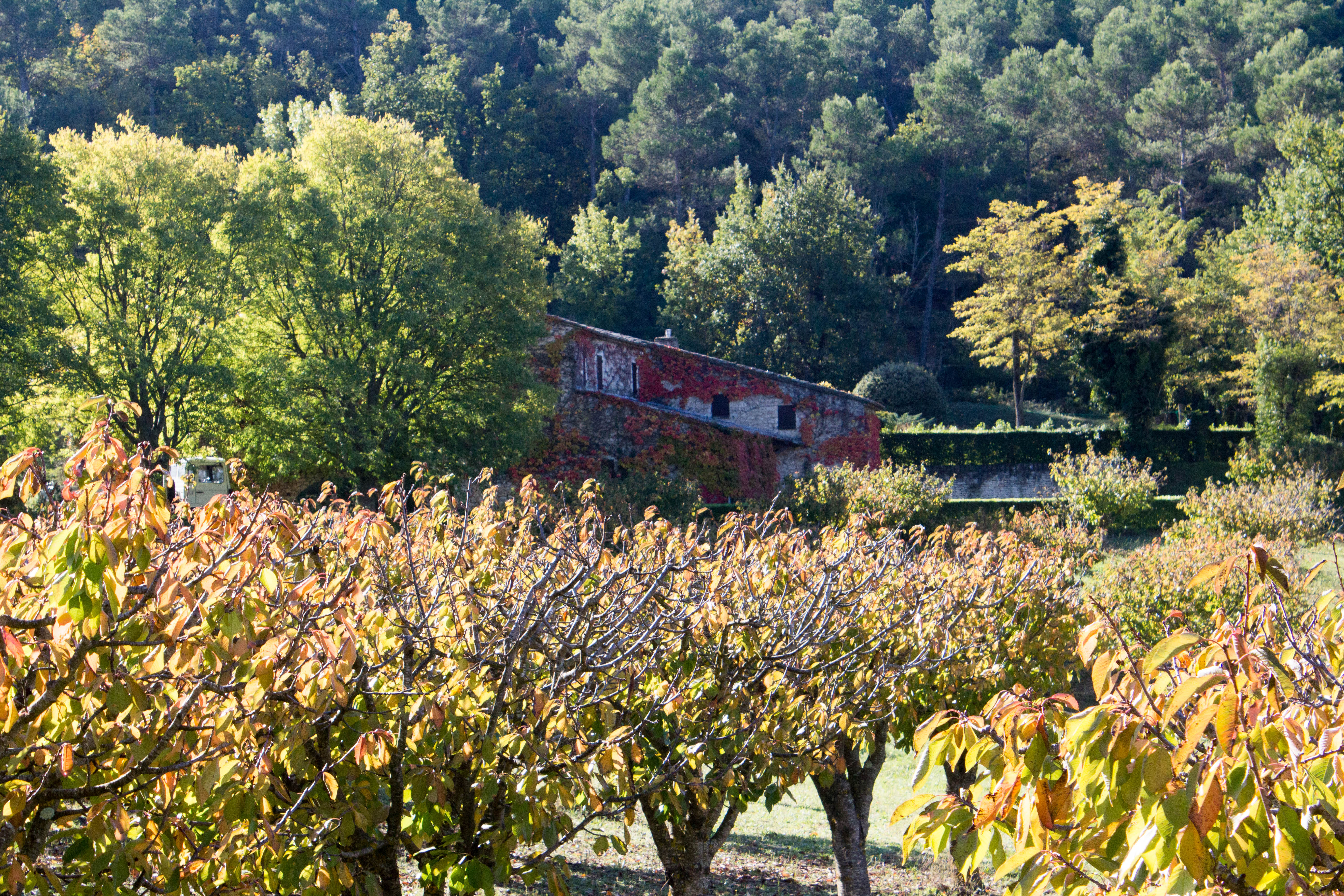
We came out into a hidden valley with the mountains on all sides. Horses grazed in the front paddock of an old stone farm house on the left. On the right, rows of yellowed vines ran to the base of the hill. A two storey house nestled among them under a large oak tree.
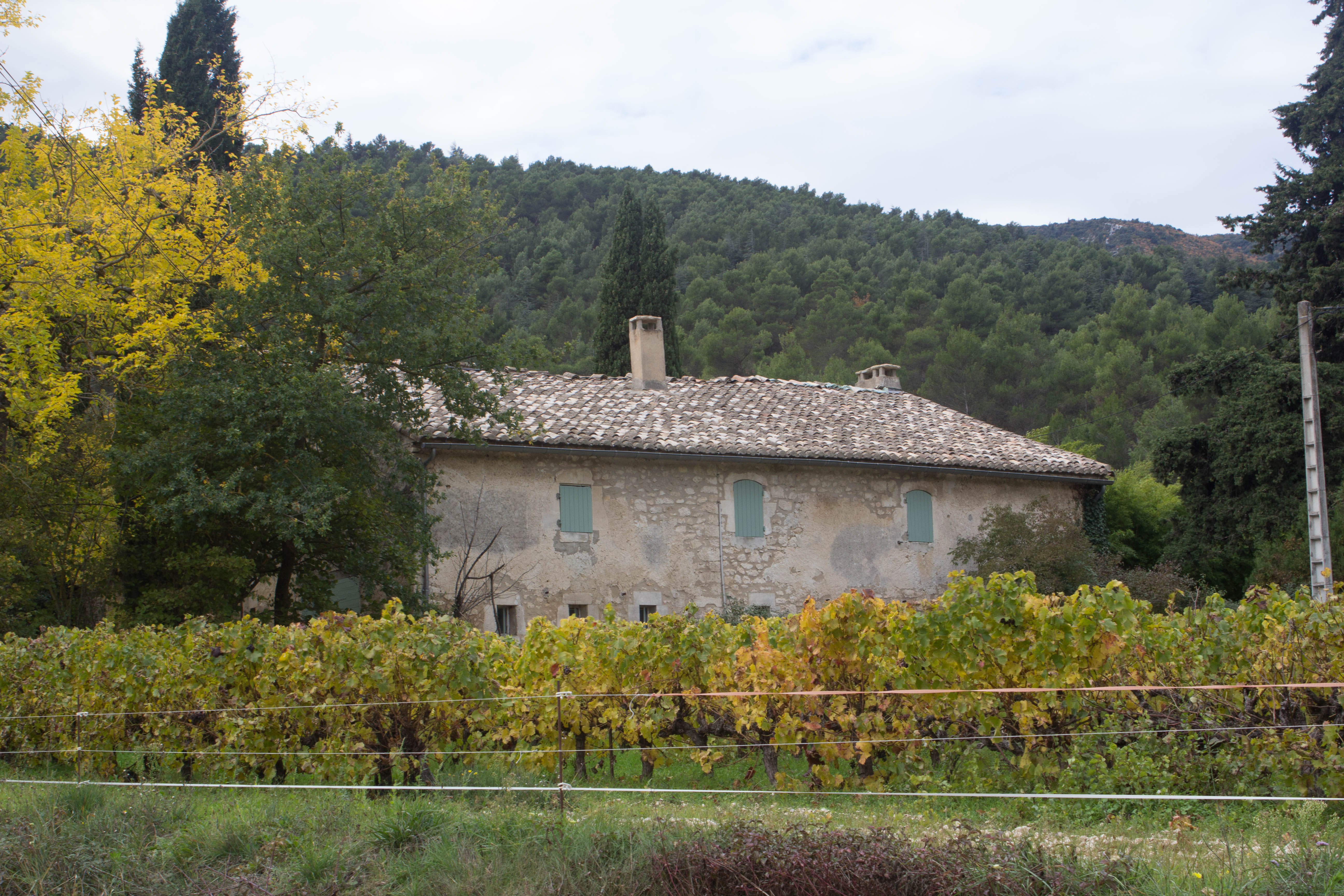
The road then switched up the mountain heading away from any chance this was Peter Mayle’s fire trail. We turned back.
Another fire trail took us behind the D3 and the houses that fronted it. Peter Mayle had said he lived two kilometres away from Menerbes on the road to Bonnieux.
We walked a long way. I peered over walls. No, I didn’t climb them. I have some dignity. But if you walk up the hill a little, away from the farm houses you can sometimes see over.
A cloud emerged from behind the mountain that looked like a large black spaceship.
Some ingenious or desperate farmer had planted a dense stand of bamboo. Now that desire for privacy deserved respect. But he wasn’t anywhere near the two kilometre mark so I left him to it.
We heard gun shots echoing off the mountains.
The whole sky blackened.
We talked about turning back. We have our waterproof coats and an umbrella, I said. It’s hunting season, he said. Stravinsky’s family wouldn’t have uttered a peep in opposition, I said. We walked on.
And there was a stone farmhouse. The fire trail behind. A swimming pool out the back and an enclosed courtyard. A little further along the trail went out to the main road and we circled around to the front of the house. There were the cherry trees and a line of cypresses.
We found Peter Mayle’s house. We think.
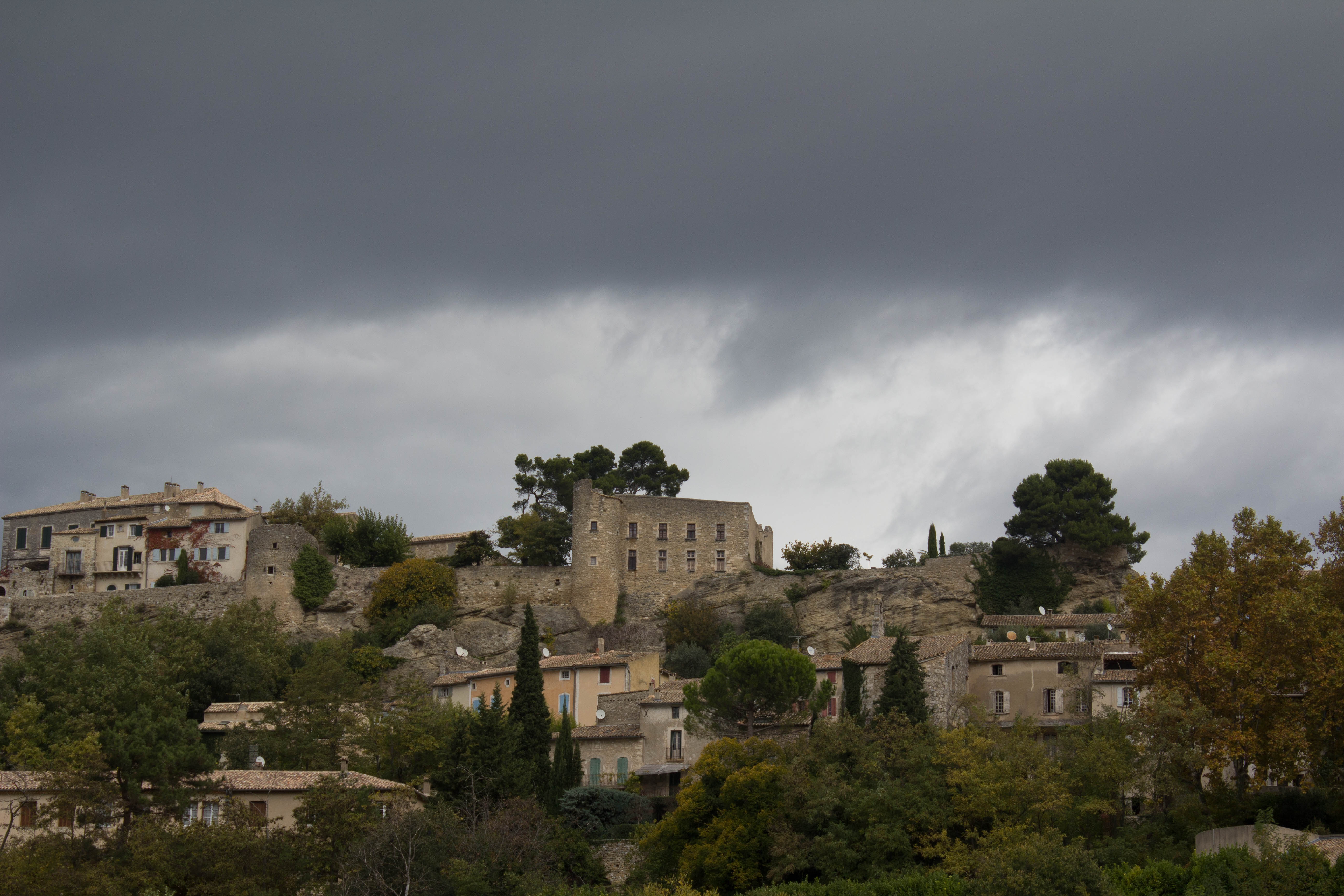
The rain held off on the long walk home. As we came into view of the village the dark cloud lifted off the castle like a halo.
It’s a sign, I said. A sign of what? he asked.
That’s the thing writers know about signs. Sometimes you have to wait for them to reveal themselves.
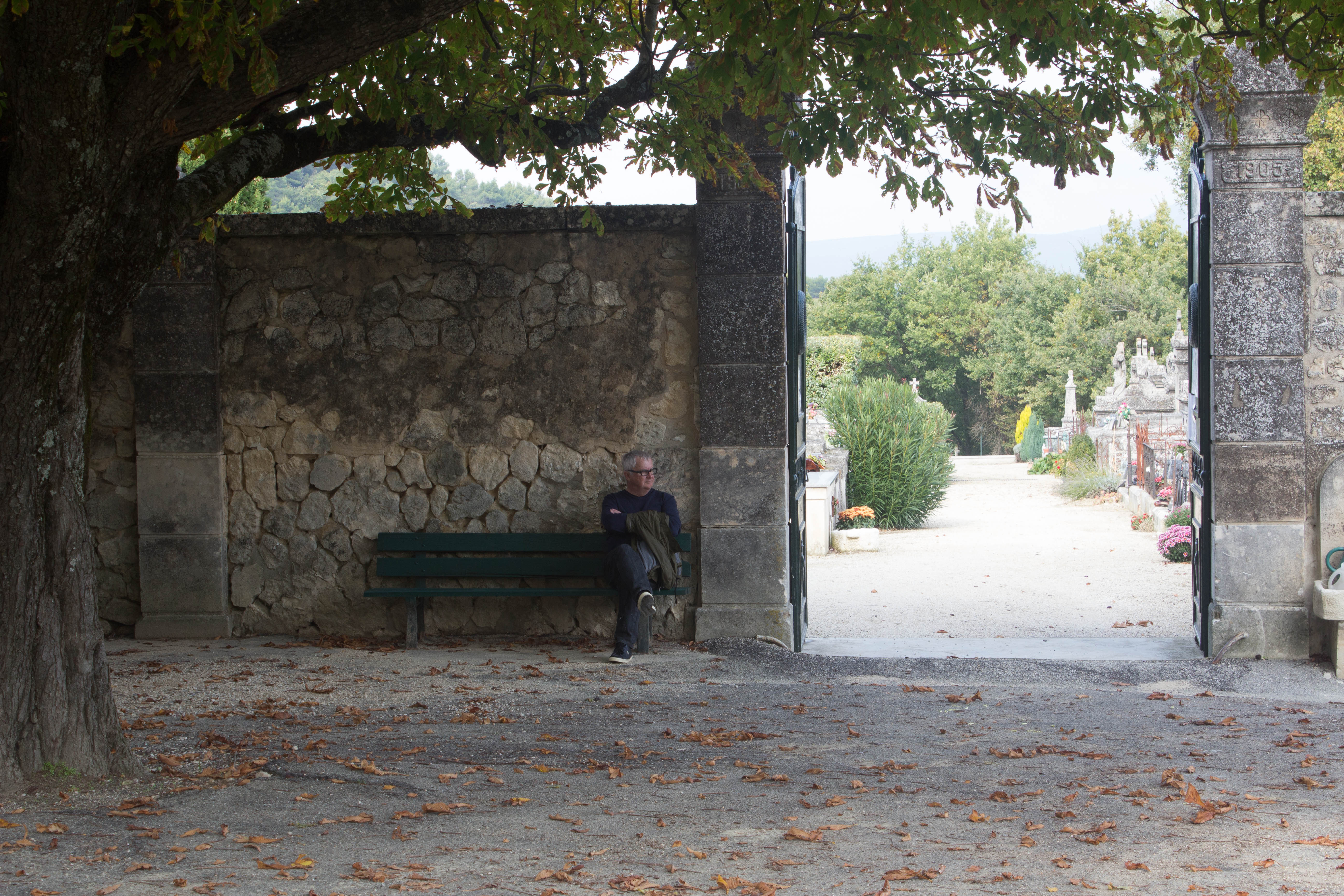
Menerbes Cemetery
Robert Dessaix’s latest book is called ‘What are days for?’ That question keeps popping up in my mind every day here. When I’m climbing up the old stone stairways worn in the middle from centuries of footsteps. Or walking through the cemeteries of lichen encrusted family tombs as I did this morning.
Dessaix thought about this question when he was lying in a hospital bed teetering on the edge of death after a massive heart attack. Thankfully my motivation is very different. I keep asking myself this question because this part of France is overwhelmingly heavy with the centuries of lives that were once lived here.

It’s in the ruins of Oppede-le-Vieux where the trees and vines have taken root in the roofless renaissance kitchens.
It’s in the beautiful, but now damaged, Chapelle Saint-Blaise in our street. It was built with humble dedication by the Brothers of White Penitents, but during the French Revolution was used as the republican meeting place.

La Chapelle Sant-Blaise
It’s in the name given to our street to commemorate Kleber Guendon who was shot here in 1944 fighting with the French Resistance.

Every corner I turn, every village I visit, makes me think about those people. What haunts me so much is the sobering thought that those people have used up all their days.
They no longer have the privilege of asking themselves that question. Which is what compels me to ask myself, ‘What are MY days for?’ And even more, to be grateful that I’m able to ask it.
The Brothers of White Penitents and Kleber Guendon probably asked themselves that question, and made choices that determined what their lives would be.
One of the things I’m sorting out here in Menerbes, is what my days are for. Because how I live my days is how I live my life.
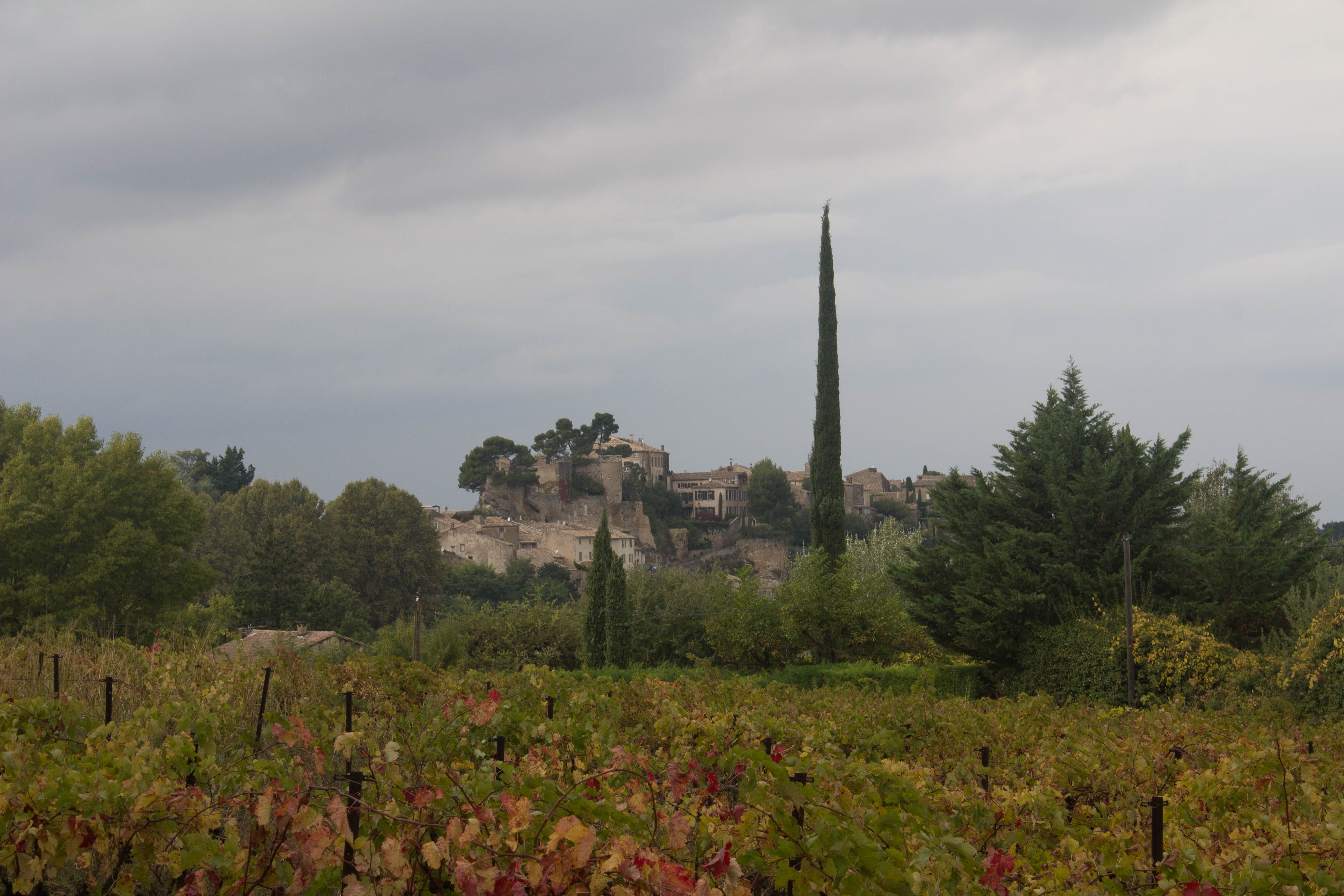
Vineyards beneath Menerebes
For the past fifteen days the words have been in flood. My pens keep running out of ink and my second notebook is almost full. The images, metaphors and scenes are damming up, coming so fast I can’t keep up.
Today’s plan was this:
1. Write until 12.
2. Sunday lunch at the restaurant a 60 foot journey from our front door.
3. Write until dinner.
You know those writing sessions when from the first sentence it’s obvious the words are not going to behave. They won’t say what they mean. They make the sentences chunky and flat, with as much rhythm as new born puppy.
The more I wrote today the worse it got. Oh, there were words. My usual method is to start writing and keep the pen going. I write my way into things. This morning I filled the pages with the most banal lifeless writing it was possible to produce. Not once did I click over into that phase where the writing takes over and you disappear into it.
So what did I do?
I did what all writers do. I wondered what the hell I was doing here pretending to be a writer? Who was I kidding? If I wanted evidence of how bad I was I just had to look at this crap.
Then I remembered reading an interview with Helen Garner. She had those times when she felt like a fake, when all she wanted to do was curl up in bed with her shame. When that happened she stopped writing, went to a movie, did something that got her away from it.
So I made a cup of coffee and ate an almond navette. Then I went to lunch. I had two courses – seafood salad and a 7-hour roasted lamb shank, if you’re interested – and half a bottle of red wine that came from the vines at the bottom of the hill.
Afterwards I had a two hour afternoon nap and then I watched Australia thrash Argentina in the Rugby World Cup. The Wallabies did a great day’s work.
I’m just having a great day!
 The Writers' Life