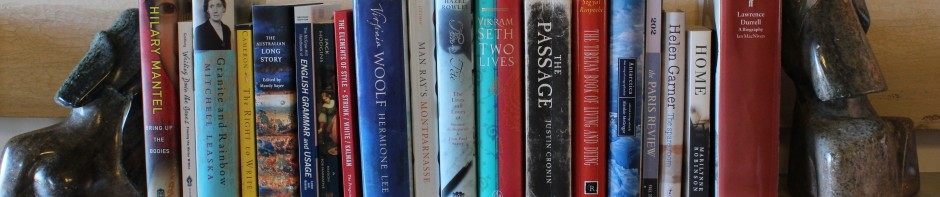

satin bowerbird
My nest is my writer’s journal. I like to collect fragments of conversations that show aspects of character, or suggest possible conflict or plot. I’m always on the lookout for quirky words and phrases and the interesting ways people have of putting them together.
Last week I came across Kenneth Fearing’s brilliant poem, Love, 20 cents the First Quarter Mile. When I stopped laughing, and also cringing at his appalling narrator, I wrote the poem in my journal because it’s a perfect example of great dramatic dialogue.
The dialogue has purpose. It reveals character, moves the plot forward and supplies important information. Often it does all three at the same time.
Conflict is established in the first paragraph,
the narrator’s character is clearly exposed through what he says and how he says it,
we learn about the nature of his girl, although we don’t hear a word from her,
their dysfunctional relationship is cleverly revealed,
a possible future for the hapless couple is suggested,
a back story or past is revealed…
all through dialogue.
As in all great writing the reader is asked to form her own opinion about the characters and the situation. The tone of the poem suits the content. It’s highly conversational and there’s no jarring formality or stilted syntax.
Here’s the poem. Enjoy it.
Love, 20 cents the First Quarter Mile
By Kenneth Fearing
All right. I may have lied to you and about you, and made a
few pronouncements a bit too sweeping, perhaps, and
possibly forgotten to tag the bases here or there,
And damned your extravagance, and maligned your tastes,
and libeled your relatives, and slandered a few of your
friends, O. K. ,
Nevertheless, come back.
Come home. I will agree to forget the statements that you
issued so copiously to the neighbors and the press,
And you will forget that figment of your imagination, the
blonde from Detroit;
I will agree that your lady friend who lives above us is not
crazy, bats, nutty as they come, but on the contrary rather
bright,
And you will concede that poor old Steinberg is neither a
drunk, nor a swindler, but simply a guy, on the eccentric
side, trying to get along.
(Are you listening, you bitch, and have you got this straight?)
Because I forgive you, yes, for everything. I forgive you for
being beautiful and generous and wise,
I forgive you, to put it simply, for being alive, and pardon
you, in short, for being you.
Because tonight you are in my hair and eyes,
And every street light that our taxi passes shows me you
again, still you,
And because tonight all other nights are black, all other hours
are cold and far away, and now, this minute, the stars are
very near and bright.
Come back. We will have a celebration to end all celebrations.
We will invite the undertaker who lives beneath us, and a
couple of boys from the office, and some other friends.
And Steinberg, who is off the wagon, and that
insane woman who lives upstairs, and a few reporters, if
anything should break.






 The Writers' Life