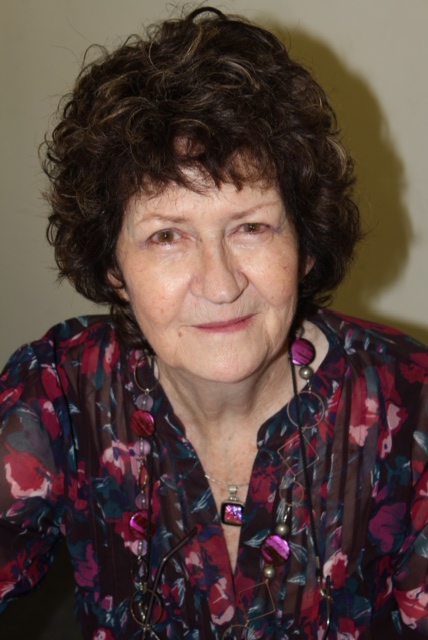
Guest Post: Maree Gallop

IMG_5731

My interest around creative writing was sparked about three years ago. I was finishing my last subject for my Masters of Mental Health Nursing Degree and we were asked to develop our own philosophy about teaching and learning in the clinical context. After years of assignments and referencing, and quoting other people it was such a freeing experience to express myself through creative writing. I was hooked.

Being an avid reader I started to look at books differently to try and find the right recipe behind a masterpiece. I soon realized there was so much more to writing than just simply putting words on the page. So about a year and a half ago, I signed up for the WEA Creative Writing courses and Workshops to uncover the hidden code. I realized that there is a lifetime of learning associated with this and it just so happens that I’m addicted to learning! This has opened up a whole new world for me. Writing has become my passion.

I’ve always been a keen listener to other people’s stories, observing people and discovering the world around me. Now I feel that all those elements will enable me to create my own stories.

Over the years (before husband and kids) I travelled widely overseas. Two of my favourite experiences included backpacking around South America for a year with a friend and spending two months trekking through Africa. More recently (with husband and kids) we’ve travelled in a camper van (and tent when necessary) throughout Australia to some outback and remote destinations. Cape York and The Kimberleys are two of the many highlights. I feel lucky to have experienced such amazing places, people and lessons along the way, which I hope to use in my writing.

Another passion (besides family, travel and writing) is my nursing work in mental health and my voluntary involvement in charity work in the local disability community.

One of the most exciting things I have done in a long while was to be able to combine my experience in mental health with creative writing. The Hunter Writers’ Centre ran a competition in August for Grief Awareness Month.

The focus for my 500 word short story was based on the loss and grief that families affected by dementia experience. The story is called The Clothes Heist and uses clothes as a metaphor to symbolize grief and loss when words are difficult to find.
 
There were 25 shortlisted stories chosen by four judges. These stories were read by experienced readers at the Grieve Live Read at The Theatre Lane Hotel. The audience voted. There were three prizes. I was honoured on the night to receive 2nd prize.
 
The winning and shortlisted stories will be e-published soon on the Hunter Writers’ Centre website for all to read. The e-book will make an important contribution to the issue of grief and loss.

So I guess my tip behind gathering ideas for meaningful and enjoyable writing are

* to actively listen to others and value their stories

* observe people and places with an open mind

* explore the world around you

* make life an adventure and uncover the treasures.

To develop skills

* meet with other writers

* welcome their critiques

* challenge yourself with new thoughts, ideas and perspectives.

Lastly, write with passion. Happy writing!


Posted in Uncategorized, Writing | Tagged , , , , | 9 Comments

Margaret Jackson: ON LEARNING TO WRITE

A year and a half ago I took my first creative writing course. I hadn’t known there were rules. These were like the rocks of a hidden reef that sank the unwary and uninformed.

To name just a few: the various viewpoints; then point of view. I learned there must be conflict either/and inner and outer conflict. And the biggy: Show, don’t tell.

Show, don’t tell has been perhaps the hardest. First big victory was when I was told I tended to show and tell. Progress. I still struggle with this to the encouraging comments of my tutor and my friends from the writer’s workshop. I recently read something that freed me up from the constriction of the dreaded rules –

‘Don’t think of them as rules but as guidelines only.’

After all to be creative sometimes we need to throw the rules away and work outside the box.

photo

A few of us have formed a small Writer’s Group – we try to meet once a fortnight to critique each other’s work and lend one another support and encouragement. This has been amazing. We have learned to trust each other and be honest in our critiquing as well as supportive and encouraging. We discuss the craft of writing and learn through the discussion. It helps to keep us writing.

In the early days of our small group one wise young women made a comment that made me realise that not everyone is writing the great novel or pursuing publication. Some are interested in writing as a hobby. Just for the joy of writing. Some see it as a great social outlet with people who have the same interests. For all these people, writer’s groups and writers workshops are wonderful places to have their writing read and critiqued.

Others who are serious about pursuing publication find great help in classes, and workshops and particularly in writing groups. In my case I found myself focusing on learning the craft as I wrote. What great satisfaction there has been, often mixed with frustration, each time I leapt over another hurdle and felt as if I had reached a new level.

But for all of us, mostly the writing occurs within the framework of our lives – around jobs and babies, children and bills, through the changing stages of our lives and all the struggles therein. Whatever category of writer you are the one essential thing I believe you need is passion about the writing.

Writing this post has had me thinking – What are some of the things that have been most helpful on my journey?

* A Tutor who recognizes each level I’ve reached and critiques my work accordingly while encouraging me and challenging me.

* Yes, the Rules / Guidelines.

* A writer’s workshop

* My Small Writer’s Group. I think once you are on your way with writing this is a must. I know of writer’s groups that have been together for 15 years and most of the members are now published authors.

* Learning to critique other writers work which helps us in critiquing our own work.

* Going back and reading earlier work to show yourself you really have improved and grown.

* Finally just writing – around the blocks and through the victories and the failures.

So I wonder if any of you would like to share some of the helpful things or even challenges you’ve found on your own writer’s journey?

Posted in Uncategorized, Writing | Tagged , , | 7 Comments

Guest Post: Aidan Walsh

Aidan
Hello all, I’m Aidan Walsh and Karen has asked me to pop in for a guest post. A quick intro: I’ve been telling people I’m a writer for about twelve years and writing seriously for about six. I mostly write speculative fiction and I prefer novels to short stories. However, I recently had my first little success when my story Reunification won the 2013 Conflux short story competition. I’ve also just finished my first novel Voyage of the Game Bird, which is currently off being read by some agents. Gulp.

Now you know with how many tonnes of salt you should take my advice.

When Karen first approached me, I wasn’t really sure what I’d write about. I like my writing style, but it is simple and fairly direct. I’m not sure I boast any of Karen’s elegance of style or thoughtfulness. I see my approach, both to writing and the craft in total, as workmanlike.

Workmanlike…

The more I thought about it, the more I realised that is my strength. I’m productive and efficient. I get a good volume of words down and am great at keeping focused on working towards what I want to achieve with my writing. So I decided that would be the loose subject for this blog. And here it is; “a writer’s ethos” or eight things you need to do (in my VERY personal opinion) to give yourself a chance of getting published.

1. Pick a target.

There are no bad reasons to write. Writing a cathartic piece you’re going to burn immediately after typing “The End” is just as valid as trying to write a best seller. But I do think you’re absolutely raving mad if you don’t sit down and think really hard about what your reason for writing are.

Why?

Because it’ll save you heartache, that’s why.

Be honest with yourself. If you are aiming to write an unedited, rambling, intensely personal account of your family life, do that. But don’t then try and shop it around and get desperately hurt when people don’t get it. On the other side of the coin, if you aim to become a New York Time Bestseller (TM) face the fact that things will be tough at times. Put all the cosiness and gentleness you feel towards your writing aside. You’re going to have sleepless nights. You’re going to get bloodied and bruised. Succeed or fail, strangers are going to tear your work to shreds. Get that mental armour ready.

I’m not saying you need a project plan (nervous chuckle) but if you are just starting out, you really, really should take some time to think honestly about what you want to do with your writing. Believe me, it’s strange how many people haven’t and end up drifting towards wanting to be published as a kind of default objective.

If you are writing for any other reason than ‘to land a publishing deal’, you can bail out now. The rest of this piece is really for poor blighters who pick that sorry path.

2. Work hard.

Before we go any further let’s get one thing straight – if you’re lazy, a publishing deal is never going to happen. Hell, that finished novel probably isn’t either. Even if you aren’t lazy, you need to think about how hard you are writing.

You’re passionate about writing, yeah? Consider this. It isn’t that unusual for a young lawyer to work 15-16 hour days. Doctors, same kind of hours. Indeed, plenty of young professionals regularly crack out 12+ hours. I’m a bolshie fair-day’s-pay-for-a-fair-day’s-work type and I’m not venerating that kind of work life balance, but you are going to be competing for spots (with an agent or publisher) with authors who do work that hard. Tough, I know.

I work full time at a telco and I have an eight month old daughter, so I absolutely appreciate that life gets in the way and we can’t all work that hard on our writing. But it’s this simple – if you aren’t writing hard now (or at least trying to) chances are pretty good you never will. We’d all love to lounge about in the Brittany sun, drinking cheap wine and waiting for inspiration to hit us, but it ain’t going to happen. So try to teach yourself to write on the bus, or at night when the kids are asleep, or for that hour before footy training. Any word you get down on paper is a good word – that’s the mantra. You don’t need to square away 10 hours a day, but if you aren’t finding time to write right now, it just isn’t going to happen for you.

Don’t be that idiot at parties who tells everyone he is a writer* but who hasn’t put pen to paper in years. No one wants to be him.

3. Only writing is writing.

This is a hard one (for me).

There are a million ancillary things that will help your career along; social media, blogging (ha!**), workshops, research, outlines, plans, character sketches, maps to draw, fantasy languages to invent, flow charts, imaginary political system to design, writer’s groups, critique exchanges, slush reading, blah, blah and blah.

All of these are fantastic tools and all of them (well used) will either help you produce a better piece or make you a more confident writer. But they can also be distracting and plenty of aspiring writers seem to end up accidentally ‘stuck’ doing these sort of exercises endlessly. What to do? Just take stock every now and then to make sure you are expending the majority of your labour and time on your core work (preferably the manuscript, short story etc you have on the go).

4. Doubt is your best friend. 

Ah doubt, a maker and breaker of writers.

Some doubt is good. No budding writer is worse than the one who thinks their work is perfect. You need to doubt your work. You must be able to look at it critically and objectively. You need to work tirelessly at your craft. You have to try and poke big holes in your manuscript. You need to seek and then process feedback, even when it feels like a kick in the guts. That’s the good doubt.

A little bit of terror is great for a writer. It will keep you sharp.

5. …and your worst enemy.

But not too much doubt. That’s bad, oh so bad.

Too much doubt will leave you with a bottom drawer of beautifully polished manuscripts no one has ever read. Or even worse, without the confidence to finish anything.

I don’t think anyone is ever completely happy with their work, but at some stage you need to put your stuff out there and judge the reactions. If your beta readers laugh and snicker, so be it, back to the drawing board***. If they love it, pour yourself a celebratory drink. But no matter what happens, at least you know where you are at.

You need to walk that line. Or just swing wildly between abject terror and towering confidence, that’d work as well. You need enough self-doubt to hammer your work into shape and enough self-confidence to keep throwing it out there when all the odds are against you.

6. Writing is love. 

Like the ability to work hard, I think loving the act of writing is a nonnegotiable.

This is a hard and disappointing and slow and murky and tough path. You need something to keep you going when you’ve had a shit day and a few beers and some shit TV is looking all too good. We all have different parts of the craft we love and hate. As you long as love something about the process of writing – even if it is just having finished a piece – I think that’s enough to keep you soldiering on.

If that passion and love isn’t there, I just don’t believe you can make it. For a start writing doesn’t pay well. If you don’t love it, go mow lawns. You’ll make better coin.

7. Getting published is a job.

I split things up. Like I said above, the act of writing is love and art. I am always amazingly proud of my work and embarrassingly happy with each thing I finish.

But the moment that last edit is done, I try and think about my work in a different way. Now it is just a product I need to try and sell and the people I am dealing with are doing a job, in many cases a job they are very passionate about, but still a job. They aren’t out to get me, but nor do they owe me anything. If you do love your work, it is sooo hard to not take this part personally. But you shouldn’t, it’s business.

So act like it.

Picking an author is a big deal for an agent or publisher. I doubt any of them want to sit in their yearly performance review explaining why that Aidan jerk they picked up and spent all that money and effort on has done nothing, moved no copies and turned out to be a complete and utter bastard. So be professional, be punctual, be nice. Listen. Do what you say you are going to do. Make yourself someone people would want to work with.

8. Be lucky.

Make offerings to Fortuna. Lots of offerings.

* Aidan Walsh, 1998 – 2005.

** See what I did there.

*** Also find new friends.

Read more from Aidan Walsh on his blog One eyed Scribe at http://aidanrwalsh.com
Posted in Uncategorized, Writing | Tagged , , , , | 6 Comments

Don’t Fear Writer’s Block

All writers experience those dreaded periods of not being able to write. We wander around the house, not knowing what to do, berating ourselves for not writing, depressed because we haven’t written for days, weeks, months. We fill the hours we could be writing with coffee, friends, gardening, even visits to the dentist, anything but writing.

Suppose, just suppose, that this ‘nothing’ time is actually a crucial and natural part of the writing process.

Recently I picked up a book about writing and found a whole chapter dedicated to fears that beset writers. Fear of rejection, fear of failure, fear of success, fear of not being good enough, fear of exposing ourselves, fear of only having one book, fear of hard work, and the list went on and on.

There can be no doubt these fears are very real, and crippling if we give into them.

But what if, instead of wallowing in fear, we savoured this time of doing nothing? If we used it to regroup, to immerse ourselves in the multifaceted illuminous world on the other side of our desk. If we allowed ourselves that time to observe in luxurious detail people and objects which make up our world.

In this free space we could dissect the riot of sensations and thoughts we experience, and in reassembling them discover the world anew.

Perhaps we need this hiatus to replenish and rejuvenate our whole self so, with a rekindled sense of purpose, we can even better transform our lived life into art on the page.

Posted in Uncategorized, Writing | Tagged , , , | 8 Comments

Catchfire Press Submissions

cCatchfire Press is calling for submissions of prose and poetry for their latest competition. All entries will be considered for inclusion in their new publication WATERMARK. It is also inviting submissions for the cover design.

This opportunity is open to people or entries which have a connection to the Hunter Region.

Water has always played a vital role in the Hunter. Life revolves around the ocean and lakes, the working harbour, rivers, creeks, and dams. Its past and present are beset by floods and droughts, wild storms and shipwrecks.

Your stories can be real or imagined as long as they touch on the theme of water.

Write for possible inclusion in WATERMARK by entering in the following categories.
■Prose (200 – 2500 word limit
■Poetry (up to 100 lines)

In each category
First place – $300
Second place – $200
Commendations will be awarded

The winning Cover Design will receive a $200 prize.

Send your entries by 30th September, 2013
with entry fee ($10.00 per entry) and completed entry form.

For entry form and details click here.

Posted in Poetry, Short stories, Writing | Tagged , , , , , , , | Leave a comment

Dear Writer,

Yes, that’s you. That’s the dilemma, isn’t it? When can you legitimately call yourself a writer? When is it okay to look someone in the eye and say with conviction, ‘I am a writer.’

You are a writer if:

– you write
– you’re serious about your writing
– you’re seriously not serious about writing
– you find yourself listening to people and mining them for stories you could tell.
– you love words
– beautifully formed sentences excite you
– you spend a day deciding whether to put in a comma and then the next day wondering if you should take it out
– you think your characters are real people
– you love words for their sound, rhythm or pattern regardless of their meaning
– you love talking about books and writing
– you agonize that the vision in your head will always fall short on the page
– you start writing, surfacing hours later, and it feels like minutes
– you can’t wait to get to your desk to start writing
– you clean the toilet, vacuum, do the laundry, anything that you can find that stops you writing when all the time you’re thinking about writing
– you show your work to someone else
– writing is harder for you than it is for most people

Please let me know your experiences so we can add them to the list.

If you recognize one or more of these things in yourself next time someone asks what you do, you can look them in the eye and say with conviction, ‘I am a writer.’

Posted in Uncategorized, Writing | Tagged , , , , | 6 Comments

Can characters shape the plot?

“I usually have one firm character, perhaps two, and an underlying theme – certainly a situation. And from then on, if it works at all, the characters shape the plot rather than the other way round.” Jessica Anderson in Yacker 2

I’m in awe of writers who start a story or novel with a specific and detailed outline of the plot. Writers such as Iris Murdock plan everything in great detail before they write the first sentence. Every chapter and conversation is planned. If I could write like that I’d save myself a lot of the floundering angst that accompanies my first drafts.

For me a plot only seems to form when an interesting character develops motives or personality traits capable of triggering events, or a desire or need the reader can be encouraged to care about.

Not suprising perhaps when what I love about writing, and reading, or for that matter, life, is people: what they think, feel, what drives them, what they’re prepared to do to under stress, how they conduct their relationships with others and the world around them.

My mother dreaded taking me on the bus when I was as child. I’d zone in on some fascinating but unsuspecting victim and stare. If they turned away from the obnoxious kid I’d get out of my seat, moving round to see them better.

Sometimes, even now, when we’re in public, my husband has to lean close and whisper, “Close your mouth. You’re staring.”

My stories centre around the main characters and come directly from what I discover about them. The plot for The Flood began with two feisty old sisters who were facing the threat of being forced out of their family home by well-meaning family and the strictures of government. I had been thinking about them for years and when a major flood inundated our area these two elements sprang together. I couldn’t have written this story without first knowing what the sisters looked like, about their background and their childhood, their personality and their relationships, how they would feel and act in this situation. Who they were created the plot.

Very little of what I discovered about them went directly into the story. But without that background work the sisters wouldn’t have felt like real people to me, and they wouldn’t have been able to show me how they would handle the difficulties of the situation.

I have learned to ignore the demands of plot, at least at first, and work on understanding and exploring the characters. By struggling to achieve lives of their own, my characters will usually suggest a situation that will challenge them to the utmost.

In this way my stories develop something resembling a plot.

Posted in Short stories, Uncategorized, Writing | Tagged , , , , , , , , | 1 Comment

Subtext: the art of saying what can’t be said

I’ve noticed that during times of extreme emotion or fear I’m at my most inarticulate. Either my mind goes blank, or is so full of raw emotion words don’t form coherent patterns. In fiction it’s often the same for characters.

I think I first became aware of this phenomenon when I was in Year 5 in primary school. All year I had coveted the role of Garbage Monitor. Hard to believe, I know, but everyone in the class shared that ambition, and popular notions can be very compelling.

My week came. Every lunchtime I went into the classroom for the teacher’s wastepaper basket to empty in the large bins outside. One day a group of girls were in the room when I arrived, even though classrooms were out of bounds during playtime. I sauntered across the room to the teacher’s desk, feeling virtuous and a little righteous.

Before I was halfway across Mr Perry’s voice boomed out, “What are you girls doing in here again?” He stood at the door. He glared at the girls sitting on the desks, and also at me.

‘Line up here.’ He took a ruler from the blackboard ledge. The girls lined up.

‘You, too,’ he shouted at me.

‘Sir, …’

‘Don’t tell me you weren’t in here yesterday. I saw you.”

The ruler stung my calves like needles. I walked around with a raised red stigmata for the rest of the afternoon. Anger, embarrassment, shame, and the blatant unfairness of what was happening strangled my 10 year old self.

I didn’t tell my mother, even with her famous loathing of injustice. I didn’t tell anyone.

I remembered this incident recently when I started writing a story about a husband who feared his wife was going to leave him. His fear was so strong and unbearable it seemed more plausible to me that he couldn’t talk about it. Perhaps he was frightened if he brought it out into the open the ensuing confrontation would give his wife the opportunity to go. Perhaps he couldn’t or didn’t want to acknowledge this fear to himself.

So instead of my characters discussing things head on I needed to imply the husband’s fear, move it into the subtext, make it an unspoken and half-hidden element of the story. But I also had to think of ways that would direct the reader, make them slip, under the surface of the text. These are some of ways I thought about tackling it.

• Actions and gestures are important as a means of expressing what isn’t being said. All the husband’s actions will be aimed at keeping his wife close, making himself indispensable, controlling her.

• The characters’ expressions may show glimpses of what they’re feeling when their masks are allowed to fall.

• Let the concrete objects take on emotional significance. In my story the couple watch a container ship enter the harbour. It’s being restrained by the tugs with taut steel ropes so it won’t sway off-course. Like the husband is controlling the wife so she has no room to move.

• Give the details of the world a heightened intensity. Describing objects and actions in intimate detail bestow on them a gravitas that suggests hidden meaning.

Discussing ways that make it easier for the reader to ‘see’ what can’t be ‘seen’ is difficult. I’d be very interested to hear how other writers think about subtext.

Posted in Uncategorized, Writing | Tagged , , | 2 Comments

Pride & Prejudice “Cover to Cover”

imagesCA02MT3Y“It is a truth universally acknowledged, that a single man in possession of a good fortune, must be in want of a wife.”

The Honourable Mr Darcy and Elizabeth Bennet-Darcy
cordially invite you as their honoured guests to
Newcastle’s Civic Theatre Foyer
on Sunday 25th August
between 9am and 11.30pm

to listen to a non-stop reading of
Pride and Prejudice.

Come for the full novel or
pop in and out to hear your favourite scenes.

The Jane Austen Society, Hunter branch can’t promise Mr Darcy in a clinging wet shirt but they can offer Lizzie Bennet’s wit, an elopement and a cad, and a love story that’s celebrating its 200th anniversary.

Posted in Books, Uncategorized | Tagged , , , | 2 Comments

Winning over Short Story Competition Judges – Part 2

In Part 1 we looked at what judges look for in a winning short story. This post deals with how to send your stories to competitions to give yourself the best chance of success.

1. Identify your market. If you’re submitting your story to a magazine competition, check out the stories the magazine publishes. What kind of writing are they looking for? You have a better chance of making the short list if you send your romance story to a magazine that publishes romance rather than one that prefers crime fiction.

2. Read and analyse past winners. Often these are put on the competition website. What do these winning stories have that make them stand out from the rest?

3. Find out who is judging the competition. Listen to interviews with the judge, read articles about them, read their work; look for clues about what kind of writing they like. A good judge will be as objective as possible but if he or she likes your sort of writing you are giving yourself a better chance.

4. Follow the guidelines meticulously. There are always reasons why organisers set guideline terms. Ease of reading or formatting for publication are two. Don’t use comic sans font if they ask for Times New Roman. In fact, never use comic sans if you want to be taken seriously.

5. Present your story professionally. A clean, accurate and easy to read manuscript is always well received by the judges. That includes correct spelling and punctuation.

6. Keep to the word count. Even if your story is only slightly more and gets past the registrar, with 300 stories to read the judge is not going to thank you for the extra words.

7. Send your work in before the closing date. There’s a possibility it might be read at leisure, before the rush of others clamouring for attention.

Good Luck!

Posted in Short stories, Writing | Tagged , , , , | Leave a comment